Body language affects how others see us, but can it also change how we see ourselves?
Amy Cuddy’s infamous 2012 Ted Talk (above) claimed that power posing was the key to confidence. Critics shut down her theory for years, but the latest research indicates that there may be some truth in it after all.
In a recently published meta-analysis in Psychological Bulletin, a team of psychologists shed light on the possible physical, behavioral, and psychological effects of power poses and other body positions.
Background
Initial studies on power posing indicated that engaging in expansive body positions will raise testosterone levels, lower cortisol levels, and increase risk taking. A number of these studies received a lot of media attention when they were published but faced enormous criticism because their results could not be replicated. Since then, additional studies on the effects of body positions have been published, but their results have been mixed.
The Methodology
Researchers from Germany and the United States collected and analyzed findings from past studies to determine whether posture influences a person’s self-perception, behavior, and hormone levels.
They searched 12 scientific databases using terms such as “body position” and “power pose” and found over 24,000 potentially relevant studies. Only studies that used an experimental design with random assignment, which would allow causal inferences to be drawn, were retained. To avoid publication bias, the team also sent out requests for unpublished data.
The resulting sample is the largest sample of studies on body positions so far, consisting of 128 experiments with a total of almost 10,000 participants.
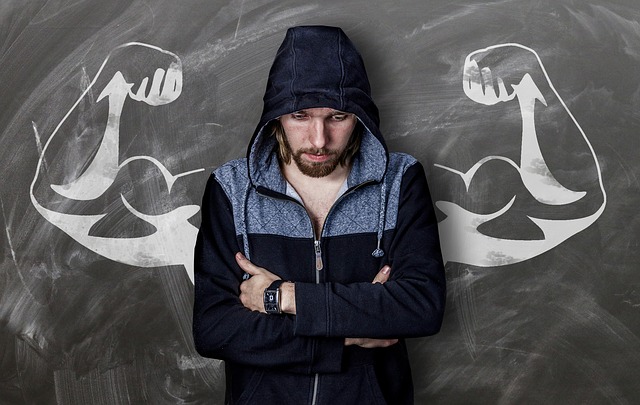
The team focused on two types of body positions:
- Power poses: Standing or sitting in a very expansive way, taking up a lot of space. A low-power pose would be crossing your legs and folding your arms while standing, or bowing your head and putting your hands on your lap while seated.
- Upright postures: Standing erect or sitting up straight in a chair versus bowing your head and slumping.
Theoretical and empirical research have suggested that power poses are nonverbal expressions of dominance, whereas upright postures are displays of prestige.
The Results
The team found clear evidence for the effects of both body position types on self-perception.
These nonverbal expressions of status clearly produced larger effects than did other forms of embodied feedback (e.g., facial feedback or arm flexion): When experimental participants took power or upright postures, they felt better and were more confident than when they took contractive or hunched body positions. The effects held for males and females of all ages in both Western and Eastern countries.
There were also some effects on behaviors, such as task persistence and antisocial behavior. However, these findings were less robust and might be influenced by outliers and/or publication bias.
There was no evidence for effects on hormones (e.g., testosterone, cortisol) or other physiological indicators (e.g., heart rate, skin conductance).
Questions Remain
Although people may feel more confident, it remains to be seen if they act more confident when standing tall.
Some research has found that power posing does affect behavioral traits like task persistence and antisocialness, but other studies have not. Only those that have found bigger effects have been published, which means researchers haven’t been able to examine studies with less significant results, a phenomenon known as publication bias.
There are some study design limitations that prevent the researchers from being able to say that standing tall can directly make you more confident. Most of the studies they analyzed didn’t have a control group; the researchers didn’t compare people power-posing to people standing in a neutral position. Instead, they asked participants to adopt either a dominant, open, or submissive posture.
Confidence vs Competence
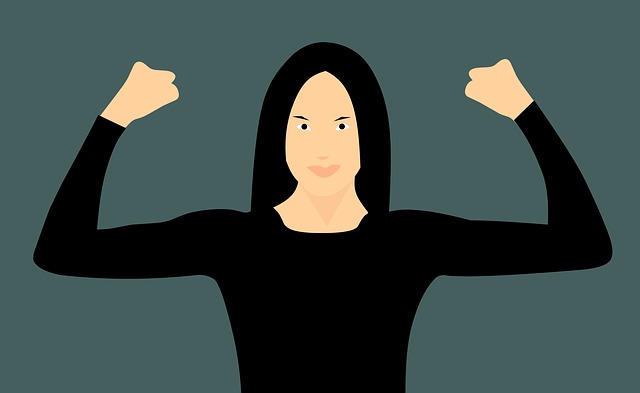 If our posture can result in different chemical configurations being manifest in our brain, can this actually help us seem competent and get a job? The answer, according to Dr. Matsumoto, is a little mixed.
On the one hand, there is certainly a lot conveyed through a sense of powerful posture. Not only can it make other people, such as an interviewer for a job, conclude that we are self-confidant, but it can even make us feel more self-assured and competent. This is not to be downplayed.
That said, it does not actually make us competent. Dr. Matsumoto cautions the aspiring power posturer against over-reliance on these tactics:
“My advice would be to first gain actual competence in your field. The last thing anyone should want is to look confident and not really be competent. Once one has a certain degree for a lot of competence, adopting certain body postures may help to feel even more confident and powerful … but they’ve got to believe it and be able to back it up with real competence.”
The post Meta Analysis: Psychological Effects of Power Poses first appeared on Humintell.