
Social Engineering Blogs

An Aggregator for Blogs About Social Engineering and Related Fields

The Humintell Blog May 31, 2018

The Science of Gratitude

Why do we feel gratitude anyway?

Gratitude seems like an incredibly central emotion in our interactions with other humans, and there is good reason for that! In past blogs, we have written about how critical cultivating gratitude can be in promoting healthy relationships and even in ensuring good physical health. Building on this research, a new study by Dr. Hongbo Yu and his team dug deeper into the neurological mechanisms at play and the fundamental role of gratitude in interpersonal interactions.

In this groundbreaking research, Dr. Yu and his team sought to use MRI machines to map out which regions of the brain were particularly active while the participant was feeling gratitude.

While past work has also sought to do this, this project was novel in trying to map out antecedent emotions, such as prosocial and reciprocal behaviors and cognitions, as well as the behaviors following feelings of gratitude.

In order to better understand these concepts, they recruited a series of 36 participants and asked them to engage in a series of activities. In each of these, participants were asked to subject themselves to a brief electric shock in exchange for receiving a monetary bonus.

Following this initial stage, participants underwent brain scans to map out relevant brain regions before engaging in “help-receiving tasks.” Here, participants were paired with fellow subjects. While one individual was to receive mild pain, their compatriot was asked to spend money to relieve their other’s suffering.

Importantly, participants were asked to decide exactly how they would behave while still undergoing the MRI brain scans. This tracked cognitions like whether they planned to help, but also the reaction of a participant to learning that they will be relieved of the pain by a stranger.

In analyzing the results, Dr. Yu’s team was able to compile a computational model that can help guide further research into this emotion. Moreover, the processes identified are not necessarily tied to gratitude alone but could be further connected to other cognitive mechanisms.

This leads to the exciting possibility that this study is a building block into larger attempts to map out cognitive processes and emotions by the neurological activity at play. Certainly this could have widespread ramifications for the study of psychology and on efforts to better read people.

The authors conclude by expressing hope that this study “serves as a role-model for investigation of the neurobiological basis of other complex emotions and their significance in social-moral life.”

But how is this helpful to better reading people? First, the study helped better understand how emotions are constructed and then converted into behavior. By understanding these processes, researchers are better able to apply neurological insights to everyday behaviors.

Filed Under: Emotion

The Humintell Blog February 20, 2018

Universal Olympian Triumph

The Olympics are also an incredible insight into the universality of emotional expressions.
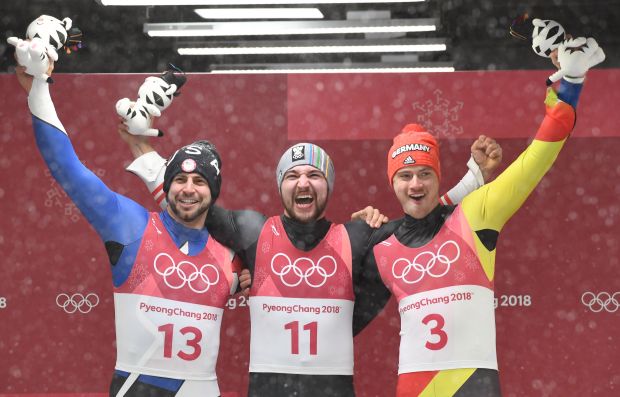
In addition to being an amazing showcase of emotions, as we discussed last week, the Olympics also demonstrate the unity of human emotions across cultures. Given that the Games bring athletes together from all over the world, they present a prime study in the differences and similarities between differents expressions of emotions.

Followers of this blog should be familiar with the phenomena of universal basic emotions but also with the reality that cultural differences do complicate the process of reading people. Gestures, eye contact, and social cues all vary, so we cannot rely on excellent people reading skills in one culture to replicate our abilities in other situations.

However, as Humintell’s Dr. David Matsumoto maintained in a radio interview last week, there are some emotions that span such cultural divides. One of these is the expression of triumph, which is so frequently showcased by Olympic victors.

As mentioned last week, Dr. Matsumoto’s research has found that, upon winning the gold, Olympic athletes almost invariably showcase the same emotion: triumph.

Interestingly, this is not traditionally included as a universal basic emotion, but all the same, Dr. Matsumoto found it again and again in pictures and videos of triumphant competitors. He noted: “When we studied pride, there was always something gnawing at me because some of the expressions that were previously labeled pride just didn’t make that much sense to me.”

Eventually, he and fellow Humintell researcher Dr. Hyi Sung Hwang labeled this emotion triumph, contending that “Triumph has its own signature expression that is immediate, automatic and universal across cultures.” Instead of the subtle, self-satisfied smile that marks pride, triumph is displayed in a jubilant, almost aggressive fashion.

In the aforementioned radio interview, Dr. Matsumoto pointed out that this emotion holds even in cultures where dominance and triumph are generally deemphasized in favor of humility, and it can be seen amongst non-human primates and even other animals as well. This all suggests a deep evolutionary and biological root behind the emotion of triumph, which we have also noted with other emotions.

Moreover, its manifestation is not just limited to a facial expression. Triumph is often accompanied by a sort of “victory stance,” with arms raised and head held up high. This holds for victors from all over the world, emphasizing past research that found similarities in gestures universally across cultures.

Last week we emphasized that the Olympics are a great time to focus on trying to read expressions, because they are particularly pronounced in both defeat and victory. But reading facial expressions is only one facet of successfully reading people. This week, we would like to encourage you to look at gestures. Can you note the features of a triumphant stance? Does anything else jump out at you?

Filed Under: Emotion, Nonverbal Behavior

The Humintell Blog February 12, 2018

Olympic-Level Emotions

(L-R) Silver medalist US Chris Mazdzer, gold medalist Austria’s David Gleirscher, and bronze medalist Germany’s Johannes Ludwig pose on the podium during the victory ceremony in the men’s luge singles during the Pyeongchang 2018 Winter Olympic Games, at the Olympic Sliding Centre on February 11, 2018 in Pyeongchang. (Mark Ralston/AFP/Getty Images)

Can the Olympics teach us anything about reading people?

Most of these blogs have been devoted to reading people’s emotions when they are being actively concealed, such as during efforts to detect deception. However, the Winter Olympics give us an opportunity to read people exhibiting unfiltered, raw emotions. With emotions as high as they are during the Games, few people would attempt to conceal their emotions, even if they weren’t so physically exhausted!

Instead of having to work to decipher microexpressions, Dr. David Matsumoto’s experience as an Olympic coach has given him unique insight into the way Olympians express emotions. Of course, because microexpressions are really just shorter macroexpressions, these blatant cases give us something to look for in more fleeting situations.

For example, after examining photos from top competitors in the 2004 Olympic Games, Dr. Matsumoto observed that the winners almost all sported pronounced, genuine smiles. He referred to these as the Duchenne smile, and the genuine nature of the setting showcases these as truly prototypical expressions of happiness.

These involved: “smiles that involve not only the smiling muscle that pulls the lip corners up but also the muscle around the eyes, which lifts the cheeks, narrow the eyelids and produces crow’s feet wrinkles.”

Similarly, this same investigation looked at the microexpressions present in athletes just following the end of the match. Immediately after victory, an athlete would show a fleeting expression of pure, unadulterated triumph, regardless of what culture they were from. Similarly, a defeated athlete exhibited consistently sad microexpressions.

The prevalence and universality of these expressions helped establish the universal nature of these emotions. However, they are not necessarily innate expressions. How could Dr. Matsumoto rule out the possibility that this behavior is simply learned from watching other athletes?

The answer to this question came when he decided to examine a series of blind judo athletes during the 2004 Paralympic Games. Certainly athletes that are blind from birth could not have learned a purely visual emotional cue!

In fact, their facial expressions were indistinguishable from the respectively triumphant or defeated expressions of sighted athletes. This was also the case for their genuine, Duchenne, smiles upon receipt of medals. These results suggest that victory or defeat in the Olympic games brings out our innate and universal expressions, and these are the same sort of basic expressions that we have delved into throughout this blog.

You might find all this interesting but still aren’t sure how this is relevant to anything. Well, all of these expressions, both in macro or micro form, are keys to effectively reading people. By looking at situations where the expression is as blatant as after an Olympic match, you can better learn how to read those expressions during more subtle and deception-based situations.

Also, with this knowledge in hand, go out and watch the Olympics! Can you spot these expressions? Trying actual applications like this can make you a better people reader, and we are excited to offer some more observations in next week’s blog!

Filed Under: Emotion, Science

  • « Previous Page
  • 1
  • …
  • 43
  • 44
  • 45
  • 46
  • 47
  • …
  • 70
  • Next Page »

About

Welcome to an aggregator for blogs about social engineering and related fields. Feel free to take a look around, and make sure to visit the original sites.

If you would like to suggest a site or contact us, use the links below.

Contact

  • Contact
  • Suggest a Site
  • Remove a Site

© Copyright 2026 Social Engineering Blogs · All Rights Reserved ·