
Social Engineering Blogs

An Aggregator for Blogs About Social Engineering and Related Fields

The Humintell Blog November 6, 2018

The Nonverbal Power of Posture

Reading nonverbal cues is not just about understanding psychology or threat detection. It can also help us get a job!

In an exciting 2010 study, Drs. Dana Carney, Amy Cuddy, and Andy Yap discuss the concept of “power posing.” Essentially, this involves using certain postures to appear more powerful. This can lead an interviewer or other interlocutor to see you as more worthy of a job, promotion or other benefit, according this insightful blog. However, Humintell’s Dr. David Matsumoto has a few words of caution.

Fundamentally, this notion of power posturing is related to evolutionary cues, where individual animals and humans seek to demonstrate their power in order to gain a greater share of available resources. Our posture greatly determines both our levels of testosterone but also our stress, both of which help convey, in very subtle ways, an impression of power.

So what is this power posture? According to Dr. Carney’s team, it involves expansive and open postures, such as spreading one’s limbs and otherwise appearing to be larger than one is. This is contrasted sharply with a slumped posture, where the body is constrained in a form of self-defense.

The details of these postures may be intuitively familiar, as many readers will probably notice. When we stand straight with arms wide, or if we lean forward, we feel and evince a sense of power. On the other hand, if we fold arms in the lap to hug our own torsos, there is a sense of meekness and submission.

Dr. Matsumoto cautions us that this does not necessarily work if we are feeling conflicted emotions: “Engaging in such postures or gestures or facial expressions would not necessarily trigger the experience in individuals who already are experiencing an emotion, especially a strong one.”

However, this does not mean that posture cannot amplify or affect our postures. As the aforementioned study explains, our posture can result in different chemical configurations being manifest in our brain. But can this actually help us seem competent and get a job? The answer, according to Dr. Matsumoto, is a little mixed.

On the one hand, there is certainly a lot conveyed through a sense of powerful posture. Not only can it make other people, such as an interviewer for a job, conclude that we are self-confidant, but it can even make us feel more self-assured and competent. This is not to be downplayed.

That said, it does not actually make us competent. Dr. Matsumoto cautions the aspiring power posturer against overreliance on these tactics:

“My advice would be to first gain actual competence in your field. The last thing anyone should want is to look confident and not really be competent. Once one has a certain degree for a lot of competence, adopting certain body postures may help to feel even more confident and powerful … but they’ve got to believe it and be able to back it up with real competence.”

Still, it is good to be aware of the power of postures. As we have noted in previous blogs, certain postures, such as that of triumph, are universal and deeply rooted in our evolutionary roots. When we are trying to read other people, moreover, it is very helpful to be able to read their posture: do they seem anxious? Confident? Powerful?
Filed Under: Nonverbal Behavior

The Humintell Blog October 1, 2018

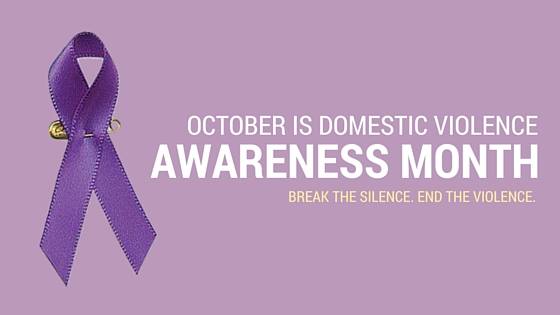
Domestic Violence Awareness Month

October is Domestic Violence Awareness Month and while this topic may be an uncomfortable one, understanding domestic violence and how to detect and prevent it can save lives.

One way of achieving this is to better train law enforcement to identify signs of aggression and violence. This involves significant people reading and emotional detection skills, as we seek to learn what microexpressions betray that feeling of aggression. As Humintell’s Drs. David Matsumoto and Hyisung Hwang found, aggression is predicted by fleeting and unconscious but also very telling facial expressions.

This research, published in the Journal of Threat Assessment and Management in 2014 relied on a series of four studies which consistently found that observers with training in law enforcement tended to reliably identify the facial signs that predict aggression and violence.

However, those without much experience witnessing or experiencing physical assaults did not tend to do well in selecting the expression that predicted violence. Drs. Matsumoto and Hwang attributed this to the reliance on stereotypical presentations of aggressive expressions, which tended to be incorrect.

Their studies also help map out exactly what the expression in question looks like, but this also grapples with the differences between types of aggression: premeditated and spontaneous.

For instance, the face of someone considering a premeditated assault is characterized by lowered brows, raised eyelids, and the tightening of lips. This appears as though they are seeking to control their expression of anger, evincing determination and concentration.

Such an expression must be contrasted with the “loss of control face,” which is seen in those who are about to attack after having just lost their temper. This expression also shows lowered brows and raised eyelids, but now the eyelids are even more starkly raised, creating a bulging, staring quality. Again, the lips are tightened, but the lower lip is not raised. The raising of the lower lip is often associated with efforts to control one’s emotions which is not present in this form of aggression.

So, how is this information helpful? And how does it relate to Domestic Violence Awareness?

Well, there are a couple lessons to draw from here. First, we have the potential to detect when someone is going to commit acts of aggression. Learning how to do this is important both for detecting when someone will attack us but also if someone is struggling to refrain from or is planning to attack others.

Second, without training, many of us are very bad at realizing this potential. While law enforcement officers were shown to be quite good at it across cultures, laypeople stand to gain a lot from a formal training procedure.

If nothing else, we hope that focusing on this potential can also help us become more aware of signs of aggression around us, for our benefit and for that of others.

*

For the month of October, save 30% on any deadly intent training course with code DVAM2019 when checking out! 

Filed Under: Emotion, Nonverbal Behavior, Science

The Humintell Blog August 21, 2018

Cultural Interview Lessons From the Road

Republished with permission from WZ

By Chris Norris, CFI

The WZ Non-Confrontational Interview method has been a part of my career for over 28 years now, and I’m happy to say that I’ve been working for WZ for 19 years. Through the years much has changed for both myself and WZ. One of the biggest changes for WZ is the huge International reach we now provide with our training classes. Did you know WZ has operations in Latin America, UK and Europe?

The International division of WZ has provided interview training courses on six continents (the penguins are next!) and to delegates from over 140 countries! I personally have taught classes translated to French, Spanish, Portuguese, Polish, German, Mandarin and Arabic. Regardless of your travels, your organization’s global reach or simply the need to interview someone from another country, there is always one common thread to interviewing and teaching interview tactics around the world; the need to develop rapport.

When training Internationally, I always ask attendees, “What makes a good interviewer?” A variety of topics, traits, and characteristics often arise, but one response consistently comes forward no matter what country I’m in; the ability to build rapport. So, what is rapport? Rapport is creating a relationship in a very short period of time. How do you build rapport? Let’s take some lessons from my travels to help understand how to build rapport in a multi-national and multi-cultural environment.

Understand local culture

Understanding a bit about the culture of your subject will help you to understand the dos and don’ts of most interviews. Understanding simple characteristics like anticipated spacial proxemics, eye contact, posturing, potential fears, etc. will benefit your interview and your ability to develop rapport.

I remember my first trip to Kabul, Afghanistan. I was teaching a class of Afghan nationals working in an investigative capacity for the US Government. During the class I asked the group to shut their workbooks, as it was time for teacher to become student. I told them I wanted to talk about their culture and learn about them. We had a great discussion and it altered my training a bit, increasing our interaction and their understanding of the WZ method.

Learning everything you can about someone’s cultural norms and characteristics from on-line resources like the US Department of State can prove to be beneficial, but the best resource is simply talking to people. Getting information from someone raised in that culture can help you to prepare and be more effective in the interview room. Allow them to tell you some common characteristics to anticipate during the interview and even potential fears they may possess; which may be very different than your own.

Learn the language

Don’t get me wrong here, I’m not saying try to conduct an interview in another language you just learned from a “Russian for Dummies” book. I mean, make an effort to say simple phrases and greetings. I’ve always made a point to learn how to say ‘hello’, ‘thank you’, ‘good-bye’, etc. in the local language. This simple, effortless task has huge meaning and is a great way to begin an interaction.

I’ve often been asked the question, “Aren’t people in country X typically rude to Americans?” My reply, “I’ve never experienced that…” and I believe is based upon me starting any greeting with “Buenos dias / Guten-tag / Bonjour / Hi-ya”. I remember once in Koln, Germany I approached an older gentleman sitting in a chair in an open square. In German, I said, “Hi, I’m sorry but I don’t speak German well, do you speak English?” He answered in German and I repeated myself. This happened a couple times until he said in clear English with a big belly laugh, “I said, your German is so good, why must I speak to you in English!?” We laughed and he was quite helpful, and my effort to know a bit of his language helped with rapport in that interaction. In fact, he walked me to my destination and made sure the person I was looking for knew that I only spoke a bit of German.

Know a few colloquialisms

“Yes Eugene it’s a real word!” During a conversation with my brother-in-law (Eugene) I was talking about colloquial language and colloquialisms. His response was “Nice made up word bro!” He didn’t believe either word was real or that most people are able to pronounce them correctly. Colloquial expressions vary from region to region and are an important way people identify with each other. Funny, how he now fits “colloquial” into his conversations and will send me a text afterwards to let me know he used the word!

The use of normal language and understanding of local phrases and more informal speech helps to connect with your subject. If you are interviewing your subject in English, understand some local colloquial English phrases; even if English is a second language. Remember, as a point of rapport, we tend to like people like ourselves. When you are using some colloquial phrases or words you begin to build a bit of a bond and present yourself as being more like your subject.

I’ve learned that telling someone in Ireland that dinner was “grand” or replying with a “thanks a million” can go a long way. Even telling someone I was “knackered” while living in the UK showed I was willing to immerse myself into local customs. Listen carefully and think about mimicking your subject; not patronizing, just altering your presentation and word choices. Taking time to adjust your speech and use simple colloquial phrases will create a more natural communication platform with your subject.

Become more animated

The use of non-verbal communication from an interviewer’s perspective is often overlooked. Think about animating your communication with more illustrators and body posturing that is more engaging. Your use of animation can help overcome many language or communication barriers you may experience. Think about animating your voice as well, putting emphasis on good and bad points and expressing empathy through your tone. These points will add clarity to your message.
Once, on a trip to Egypt, I was trying to order dinner with someone who spoke very little English. By using simple words (not slowing my speech or talking louder) and becoming more animated I was able to describe to him what I wanted. The order was placed and it was one of the best shawarma wraps I’ve ever had…nice and spicy, just the way I like it!

Smile!

One of the most important non-verbal communication tactics you can apply to your interviews is a simple smile. Smile when you initially greet the person. Smile when you begin the interview and attempt to develop rapport. Heck, you might even smile when you ask those difficult questions. Smiling in most cultures creates a connection and reflects and openness on your part. Smiling can defuse confusion, resistance and agitation. I’ve been fortunate enough to smile in 70 different countries in my life. Trust me when I tell you, a smile goes a long way to creating a bond.

The reason these tactics work in terms of rapport-building is they help you share a bit more common bond; even though you might be from different cultures and parts of the world. You begin to develop a sense of who the individual is and you share common traits. By sharing common traits and interests, you tend to build rapport because you become much more like them than they realize. Giving someone an opportunity to discover a common interest with you helps you build that relationship in a very short period of time. It helps you build rapport.

To interact more effectively with people from different cultures, check out our IntelliCulture course!

Filed Under: Cross Culture, culture, Nonverbal Behavior

  • « Previous Page
  • 1
  • …
  • 20
  • 21
  • 22
  • 23
  • 24
  • …
  • 203
  • Next Page »

About

Welcome to an aggregator for blogs about social engineering and related fields. Feel free to take a look around, and make sure to visit the original sites.

If you would like to suggest a site or contact us, use the links below.

Contact

  • Contact
  • Suggest a Site
  • Remove a Site

© Copyright 2026 Social Engineering Blogs · All Rights Reserved ·