Social Engineering Blogs

An Aggregator for Blogs About Social Engineering and Related Fields

The Humintell Blog February 19, 2024

How Many Types of Smiles Are There? Smiles And Their Meaning

Over the years there have been many questions about the number of smiles that exist. The truth of the matter is that that number is too vast to catalogue. Here’s why.

The first thing to remember about reading faces concerns whether they are displaying an emotion or not.

Remember, emotions are reactions to events that are meaningful to someone and that potentially impact their survival. Thus, facial expressions of emotion go on and off the face relatively quickly.

Single episodes of normal emotional expressions that are not concealed (what we call macroexpressions) go on and off the face between 0.5 and 5 seconds.

Microexpressions (signs of concealed, suppressed, or repressed thoughts and feelings) occur less than 0.5.

Both macro and microexpressions are reactions, and this is true with smiles associated with emotions as well.

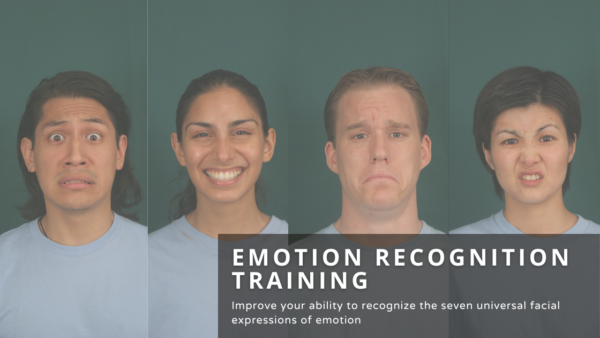
LEARN HOW TO READ MICROEXPRESSIONS

Genuine Smiles

When smiles are reactions (i.e., they go on and off the face) and they occur by themselves, they are likely to be signs of enjoyment, amusement, happiness, contentment, or some other positive emotion label (thus, there are as many labels for these smiles as there are positive emotion words in culture’s language).

When they are macroexpressions, these smiles are likely to be Duchenne smiles – genuine smiles that involve not only the lip corners being pulled up and diagonally but also the muscle around the eyes (orbicularis oculi).

This muscle raises the cheeks, stretching the skin and giving it a shiny appearance, and creates crow’s feet wrinkles at the side of the eyes for many.

When the reaction smiles are microexpressions, they may not have this muscle activated because micros can involve only parts of the full-face expression.

Reaction Smiles 

When smiles are reactions and they occur with other body movements, the smiles can signal other emotions.

For example, a reaction smile with head and gaze down and a hand to the face may be signs of embarrassment, shame, or humiliation (more emotion labels).

A smile with head tilted up, gaze up, chest puffed up, and hands on the hips (arms akimbo) may be signs of pride (and other synonyms of it).

Reaction smiles that occur with other facial expressions of emotion are interesting but the analysis is the same.

If the expression (including the smile) is a reaction, then there is likely positive emotion along with the other emotional expression. Thus, when a reaction smile occurs with a reactive angry expression, a person is likely experiencing an anger-enjoyment blend.

Smiles as Secondary Emotions

Then there are reaction smiles that occur sequentially (not blended) with other emotional expressions. Oftentimes the reaction smile might occur after another emotional expression.

These are what we call secondary emotions. What are secondary emotions? They are emotions that we have about other emotions.

Some people like the fact that they get angry and so they may smile after being angry (watch out for those people). Some people like to experience fear (think sensation seekers); they may smile after showing and experiencing fear.

These secondary emotions are the reason that horror movies are popular with a segment of the population.

Social Smiles

But smiles that occur with other emotional expressions are often not reactions; instead, they are what we call social smiles.

These are smiles that typically do not include the muscle around the eye and are not signs of enjoyment, amusement, or happiness emotional reactions; they are learned, voluntary smiles (but be careful; contrary to popular belief, many people can voluntarily produce Duchenne smiles).

Importantly, social smiles are not emotions; when they occur, they can stay on the face for a long time, much longer than four or five seconds.

And people can produce them anytime because they are used in all cultures as signs of politeness, pleasantness, courtesy, etc. (more smile labels).

Social smiles grease the wheels of all societies and cultures. Sometimes they look like they may be pasted on a person’s face (remember, they’re not reactions).

Smiles that Qualify or Comment on Emotion

When social smiles occur with other emotional reactions, they qualify or comment on those other emotions.

  • A social smile with an angry expression softens the display of anger.
  • A social smile with a sad expression (aka a miserable smile) says that even though you’re sad, things will be all right.
  • A social smile with a fearful expression says the same – even though you’re afraid, things will be OK.
  • And the pasted, asymmetrical smiles (aka smirks or dominant smiles, other labels) are signs of personality (arrogance, another label).

Then there’s all the social smiles that occur in the vast number of different contexts of life, many of which have been given cute names in the past. When you think about it, these are all tied to specific contexts.

Thus, there’s the all the different types of smiles you can read about elsewhere, such as:

  • Reward smiles
  • Affiliative smiles
  • Flirtatious smiles
  • Lonely smiles
  • Dampened smiles
  • Fake smiles
  • Wistful smiles
  • Polite smiles
  • Pan Am smiles
  • Chaplin smile
  • Forced smiles
  • Uncomfortable smile
  • Sarcastic smiles
  • Love smiles
  • Interested smiles
  • Seductive smile
  • Courtship smiles
  • Dazzling smiles
  • Etc. etc.

All of these are social smiles that may include other body movements (e.g., sideways look, touching the hair with the flirtatious smile) that occur in specific contexts. And some reaction smiles of enjoyment also occur in specific contexts, such as what is known as schadenfreude (joy in someone else’s misfortunes)

Because these are all labels of smiles that occur in a specific context, it goes to reason that there are as many possible smiles to interpret and label as there are the various contexts of life.

But the smile itself is always the same – lip corners up and diagonal.

What differs is whether that particular expression in that particular context is important enough in our culture and everyday language to give it a specific label. Words and phrases are symbols that depict real life phenomena in language so that we can talk about them, and cultures and language reify or lift up specific phenomena of life that are important to those cultures for whatever reason.

Thus, there’s probably a gazillion types of smiles out there if you tie a smile with a context and want to label it. Or only two – smiles of true positive emotions and social smiles.

The post How Many Types of Smiles Are There? Smiles And Their Meaning first appeared on Humintell.

Filed Under: Emotion

The Humintell Blog February 12, 2024

How Does Music Affect Our Emotions? A Cross-Cultural Study

Emotions from Music

Most people know the power of music and the emotions music can invoke. Listen to a happy song with an upbeat tone and you may find yourself tapping your feet. Listen to a sad song and it may bring tears to your eyes.

In fact, research has shown that music can activate our autonomic nervous system and even cause shivers down the spine.

A fascinating new study also suggests that music’s power to unify emotions and movements may have played a role in human evolution, fostering social bonds and community.

Music and Emotion Research

The recent music and emotion research study out of Turku PET Center in Finland reveals that music’s emotional impact transcends cultures, evoking similar bodily sensations around the world.

Researchers found that happy music energizes arms and legs, while sad tunes resonate in the chest.

Credit: Lauri Nummenmaa, University of Turku

The results of the study entitled “Bodily maps of musical sensations across cultures” were on 25 January 2024 in the Proceedings of the National Academy of Sciences.

This cross-cultural study had a total of 1,500 participants who completed an online survey.

Western and Asian participants rated the emotions and bodily sensations evoked by Western and Asian songs.

The emotions and bodily sensations evoked by music were similar across Western and Asian listeners. The bodily sensations were also linked with the music-induced emotions.

“Certain acoustic features of music were associated with similar emotions in both Western and Asian listeners. Music with a clear beat was found happy and danceable while dissonance in music was associated with aggressiveness. Since these sensations are similar across different cultures, music-induced emotions are likely independent of culture and learning and based on inherited biological mechanisms,” says Professor Lauri Nummenmaa.

Similar to universal facial expressions of emotion, this recent musical study suggests that music’s influence on the body is universal across cultures. It also suggests people moving to music in all cultures and synchronized postures, movements and vocalizations is a universal sign for affiliation.

The researchers suggest that music may have emerged during the evolution of human species to promote social interaction and sense of community by synchronizing the bodies and emotions of the listeners.

Universal Emotions in Music

The idea that music produces universal emotional responses has been studied before.

Research led by Eline Adrianne Smit and colleagues from the MARCS Institute for Brain suggests certain elements of music are hard-wired into the human central nervous system.

Smit and colleagues asked musicians and non-musicians in Sydney, Australia as well as different communities from Papua New Guinea with varying degrees of exposure to Western music, to associate major and minor melodies with either happiness or sadness.

The researchers found that the degree of familiarity with Western music corresponded with the association between major melodies with happiness, and minor melodies with sadness.


This study suggests that familiarity through cultural exposure plays and important factor when associating major and minor melodies with happiness and sadness respectively.

Interestingly, major chords tend to appear more frequently than minor chords in popular music and research shows that humans are likely to attribute positive emotions to things that we are familiar with.

The post How Does Music Affect Our Emotions? A Cross-Cultural Study first appeared on Humintell.

Filed Under: Cross Culture, Emotion, Science

The Humintell Blog December 19, 2023

Can Getting Angry Help You Achieve Your Goals?

When we think about potentially destructive emotions, we often think about anger. And for good reason; anger is probably the most common emotion that leads to feelings of regret later.

Dr. Matsumoto doesn’t believe anger is inherently a “bad” emotion. Getting angry can result in some good in our lives and in society. Anger, and all other basic emotions, exist for a reason.

In fact, according to new research by Heather Lench et al, anger can be a powerful motivator for people to achieve challenging goals in their lives.

Their study entitled Anger Has Benefits for Attaining Goals was recently published in Journal of Personality and Social Psychology.

Anger Study Methodology

Lench and her team of researchers conducted a series of 6 different experiments involving more than 1,000 participants and analyzed survey data from more than 1,400 respondents.

In each experiment, researchers elicited either an emotional response (such as anger, amusement, desire or sadness) or a neutral emotional state, and then presented participants with a challenging goal.

Participants were then asked to perform various tasks such as solves a series of word puzzles or attain high scores on a skiing video game.

Anger Study Results

Across all the experiments, anger improved people’s ability to reach their goals compared with a neutral condition in a variety of challenging situations.

Here is a summary of the 6 study results taken from the article’s abstract:

  1. Anger resulted in more difficult puzzles solved correctly.
  2. Anger increased cheating rates and numbers of unearned prizes.
  3. With a goal to do well in a video game, Anger increased scores on a game with challenges to be avoided, but not other scores.
  4. In two studies, examining the consequences of anger in response to the challenging task that was the focus of that anger, anger decreased reaction time with goals to win trials.
  5. Anger also predicted making the effort to vote in two contentious elections.
  6. With a goal to protect financial resources, anger increased action taken to prevent loss compared to a physiological arousal condition.

Anger Implications

The functionalist theory of emotion, which has been studied for decades, suggests that all emotions, good or bad, are reactions to events within a person’s environment and serve the purpose of alerting that person to important situations that require actions.

Each emotion may call for a different response. For example, sadness may indicate that a person needs to seek help or emotional support, while anger may suggest they need to take action to overcome an obstacle.

“People often believe that a state of happiness is ideal, and the majority of people consider the pursuit of happiness a major life goal,” said lead author Heather Lench, Ph.D., a professor in the department of psychological and brain sciences at Texas A&M University.

“The view that positive emotion is ideal for mental health and well-being has been prominent in lay and psychological accounts of emotion, but previous research suggests that a mix of emotions, including negative emotions like anger, result in the best outcomes.”

“These findings demonstrate that anger increases effort toward attaining a desired goal, frequently resulting in greater success,” said Lench.

Appraisal Theories of Emotion

Indeed, most emotion scientists (including Humintell Director Dr. Matsumoto) believe that emotions are triggered by how we evaluate events.

These events include not only what happens around us, but also thoughts and feelings in our heads, because those thoughts and feelings can themselves trigger emotions.

This evaluation process is known as appraisal, and over the decades there have been tons of research that have led to many different appraisal theories of emotion.

Although there are differences among them, these theories generally state that there are different emotions are triggered (or elicited) by different ways we appraise or evaluate events, and that different emotions are triggered by different appraisals.

We’ve written about this extensively in a past blog entitled “What Triggers Emotions in Humans?”

The results of this study make perfect sense as the universal, psychological theme that triggers anger all around the world is goal obstruction.

That is, anger is the emotion that is triggered when our goals are blocked or obstructed.

When our goals are blocked, anger helps prepare our bodies to fight in order to removal those obstacles. This may perhaps explain why participants performed better on certain tasks when this emotion was elicited.


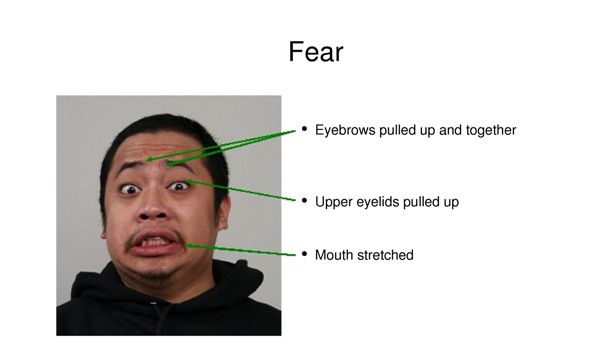
Want to improve your ability to detect anger as well as the other basic emotions?

Take a look at our best-selling emotion recognition training program, MiX Enhanced!

Show me how to read emotions!

The post Can Getting Angry Help You Achieve Your Goals? first appeared on Humintell.

Filed Under: Emotion, Nonverbal Behavior, Science

  • « Previous Page
  • 1
  • …
  • 5
  • 6
  • 7
  • 8
  • 9
  • …
  • 69
  • Next Page »

About

Welcome to an aggregator for blogs about social engineering and related fields. Feel free to take a look around, and make sure to visit the original sites.

If you would like to suggest a site or contact us, use the links below.

Contact

  • Contact
  • Suggest a Site
  • Remove a Site

© Copyright 2026 Social Engineering Blogs · All Rights Reserved ·