
Re-published with permission from Dr. Akira Olsen
The “space age” was a memorable time in the human history. It was the first time man was able to go outside the planet and literarily not only think outside the box; but “go outside the sphere”.
Right now even though the space rush has passed, much of the excitement about space has dwindled, but one question still remains. Is there life outside? Man has not only been looking for signs of life, but also for signs of intelligence.
Two important things, life and intelligence. So, how is life different from intelligence, you may ask. Hear this out.
Life vs Intelligence
 A definition of intelligence taken from a combination of dictionaries is the ability to learn, understand and adapt to situations. There is a logical, emotional, cognitive and a host of other aspects to intelligence.
The major thing is that intelligence entails the ability to understand, learn and adapt (apply the knowledge gained accordingly). Intelligence is not necessarily a characteristic of a living thing. As we know the major characteristics of living things are movement, respiration, nutrition, irritability, growth, excretion, reproduction and death.
However, intelligence is not among these characteristics. It can be seen that simple organisms like bacteria and plants don’t show intelligence. At least it is not complex. Some may argue that bacteria may be intelligent because they can adapt to antibiotics. But, they adopt as a result of biochemical reactions and not because of reason.
For example, you don’t need to think about it before you develop immunity to common cold. Intelligence is not just about simply adapting but adapting due to logical reasoning.
The higher the class of living organisms, the more intelligent the organism.
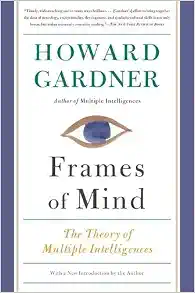 Intelligence cuts across various aspects of our lives. In 1983 a book was written by Howard Gardner. It was called Frames of Mind. This book constitutes what is now called the Theory of Multiple Intelligences. It is now widely accepted in educational contexts.
Gardner first described intelligence as the ability to solve problems or fashion products as a result of cultural settings or community settings.
He defined at least eight distinct but interconnected types of intelligence:
- Visual-spatial
- Linguistic
- Logical-mathematical
- Interpersonal
- Intrapersonal
- Musical
- Bodily-kinesthetic
- Naturalist intelligence
Although, it met with initial resistance, it is now one of the most widely accepted theories on intelligence.
Most of us should be able to relate with these. I will try not to bore you with the details of all the types of intelligence but we will talk more on the ones relevant for this topic, which is emotional intelligence.
IQ vs EI
We all know about the term “intelligence quotient” also known as IQ. Young girls, especially college students, take an intelligence quotient test from time to time to (test their intelligence). They are asked tricky questions that will require them to apply their knowledge of mathematics and logic to solve those problems. Then their “intelligence” is measured by their ability to solve these mathematical or logical problems.
What Gardner was trying to say is that this concept is flawed. Some people may be intelligent in one area but completely deficient in another.
Our educational system, parents, school teachers and adults in the community majorly recognizes and rewards those teenagers who have logical-mathematical intelligence (academic or scholarly intelligence), but does not recognize other forms of intelligence in millennial and Gen Z girls like visual-spatial (artistic), emotional (interpersonal and intrapersonal), musical intelligence and so on.
The current systems of measuring intelligence is not holistic. An IQ test only measures one aspect of intelligence out of at least 8 aspects which is Logical-Mathematical intelligence. In fact, going with the multiple intelligences theory, what we call IQ test should actually be called Logical-mathematical quotient test (LMQ test), because it only deals with one aspect of intelligence.
I want us to focus more on emotional intelligence which is probably one of the most important forms of intelligence but unfortunately, one of the least recognized.
What is Emotional Intelligence?
The concept of emotional intelligence became popular somewhere around 1995 with the publication of Goleman’s best-seller book titled Emotional Intelligence.
Also known as emotional leadership, emotional intelligence quotient or emotional quotient; is the ability to recognize and understand both your emotions and the emotions of others and use that information to adjust your thinking and behavior.
There are four dimensions to emotional intelligence. They are:
- The ability to detect emotions in themselves (intrapersonal intelligence) and others (interpersonal intelligence)
- Think about the emotion they detect
- Understand the emotions
- Use the information to control their own emotions or behaviors
An emotionally intelligent person behaves in a way that improves her/his interpersonal relationships while achieving her/his goals.
It combines at least two of the different types of intelligence — Interpersonal and intrapersonal intelligence. Intrapersonal intelligence has to do with the way you relate to yourself, while interpersonal intelligence has to do with the way you relate to others.
Emotional (interpersonal and intrapersonal) intelligence is regarded to be more important than academic (logical-mathematical) intelligence if you want to be more successful in life.
There is a popular saying that “your attitude determines your altitude”. This does not in any way justify being lazy because in this modern world of technology advancement, millennial girls have to keep in trend.
We also need to be academically intelligent and have to be able to solve logical as well as emotional problems in order to be successful. But, that aside, you have to understand why it is more important to be emotionally intelligent.
Anxiety in Teenage Girls
 Teenage girls face a lot of pressure from parents, school teachers, friends and peers. Maybe its more of puberty hormones or cultural differences, but millennial girls sometimes feel the people around them don’t understand them.
Maybe that is why more teenagers are having issues with anxiety, depression and other mental issues. They often try to cope with them using harmful practices which may lead them to phone addiction, substance abuse, or even crime. Some of these things can lower both academic and emotional intelligence.
A study has shown that internet addiction lowers emotional intelligence because excessively introverted people become addicted to the internet as a way to avoid social interactions.
This actually lowers emotional intelligence, academic intelligence and has been linked to increased chance of getting depression, obsessive compulsive disorders, mood disorders, and a host of other mental issues that can lead to marital, financial, academic and social problems.
Studies have also shown that people with high emotional intelligence have lesser tendency to develop mental issues like depression and anxiety. An effective treatment regimen for borderline personality disorder based on improving emotional intelligence was seen to be effective.
There are many other factors that must be considered for the treatment of mental disorders but emotional intelligence development may be of very great help in treating many mental health issues.
The more adults and teachers can pay attention to the emotionally intelligence of Gen Z and college students, the more they help them build more resilience to mental health problems such as anxiety disorders.
Improve your own personal effectiveness by learning the basics of emotional intelligence.
Webinar Recording: Learn the Basics of Emotional Intelligence (How to Manage Your Emotions)
References
Astrid Schultz, PhD and Sophia Nizielski, Dipl Psych. Emotional intelligence as a factor in mental health. Dept. of Psycology, Chemnitz University of Technology, Germany, 2012.
Batool, Syeda Shaluda. “Emotional Intelligence based treatment in Mental illness: a prospective analysis.” Pakistan journal of social sciences, 2011: 251–259.
Hanafin, Joan. “Multiple Intelligences Theory, Action Research, and Teacher Professional Development: The Irish MI Project.” Australian Journal of Teacher Education 39, no. 4 (2014): 126–142.
Hasan Khoshakhlagh and Salar Faramarzi, PhD. “The Relationship of Emotional Intelligence and Mental disorders with Internet Addiction in Internet Users University Students.” Addict Health 4 (2012): 133–141.
Martin-Diaz, Enrique G. Fernandez-Abascal and Maria Dolores. “Dimensions of emotional intelligence related to physical and mental health and to health behaviors.” Front. Psychol.,, March 2015.
Serani, Deborah, The emotional blindness of Alexithymia, SCIENTIFIC AMERICAN, April 2014.
The post Emotional Intelligence and Treating Anxiety Among Girls first appeared on Humintell.


 In a
In a