 One Saturday morning, after a run and workout, I looked forward to a bagel and an egg over easy for breakfast. As I settled in with my meal and flipped through the news channels, something on Fox and Friends caught my eye. It was a story on parenting. One mom talked about “bribing” her kids. She told her teenage daughter she’d take her to Disney World if she got all As on her next report card. Another parent said no way would he bribe his kids to do chores or get good grades. The last parent said she uses both techniques at different times.Obviously none of the parents understood much about what social psychology has to say about influencing behavior. The rewards the parents were offering (there were more examples than just Disney World) work to some degree. That’s why so many businesses use rewards to motivate behavior. However, studies show quite often that engaging the principle of reciprocity can be more effective and cost a lot less.One study I share during my workshops has to do with a health insurance company wanting to see if they could get a better response from owners of construction companies on their health questionnaire. With one group of business owners they offered a $50 reward for completing the questionnaire. With the rest of the business owners they sent a $5 check acknowledging their time was valuable and they appreciated them taking time to complete the questionnaire.And what were the results? You’d think the $50 offer being 10 times more would definitely get a better response but it didn’t. Only 23% of those offered the big reward filled out the questionnaire but 52% who were given the $5 gift up front complied with the request. So the response was more than twice as much in the gift scenario and there was a huge savings depending on exactly how many people cashed the $5 check. If every person, including those who didn’t fill out the questionnaire, cashed the check, the savings would be 57%. If only those who completed the questionnaire cashed the check the health company would have saved 77%! No matter how you look at it, more than doubling the response at a substantial savings is the smart business decision.Sometimes giving something small up front engages reciprocity and the other person feels it’s only right to repay the favor. Here’s a personal example with my daughter, Abigail. When she was about 15 she was a typical teenage girl. She didn’t want to do things that were physically hard and would make her sweat….like cutting the grass. I was going to be traveling and knew I’d need her help with the lawn while I was away. I also knew if I tried to negotiate I’d lose. Had I said, “Abigail, I’ll give you a $10 a week raise in your allowance if you’ll cut the grass when I need it,” she would have said, “No thanks dad, I don’t like money that much.” Then I would have either had to significantly increase my offer or pull the parent card and force her to cut the grass. Neither approach would have been good because she would resent me or make me a lot poorer.What I did instead was give her the $10 raise without asking for anything in return. When she asked why I was giving her the raise I told her reasons I believe she’d legitimately earned it. About a week later I was going on a trip and asked if she would cut the grass. Initially she hesitated and gave me a look but before we got any further I said, “Come on Abigail, I gave you a raise in your allowance and didn’t ask for anything. Can’t you help me out?” She said she’d cut the grass and has ever since – without arguing – whenever I’ve needed her help. And here’s the best part – for Christmas last year one of my gifts was a card with grass cutting coupons…and I don’t even give her an allowance anymore!As noted earlier, rewards do change behavior and that’s why they’re so prevalent in business. However, much of the time we can get the behavior change we want and spend a lot less by ethically and correctly engaging reciprocity.APPLICATION: This week take a look at instances in which you reward people for behavior and see if you can engage reciprocity instead by freely giving up front. Then, next time you need a favor just ask for their help. I think you’ll be pleasantly surprised by how many say “Yes” and that it cost you a lot less.
 Brian Ahearn, CMCT® Chief Influence Officer influencePEOPLE Helping You Learn to Hear “Yes”.
Over-believing, closure and the dangers of visualization
Sometimes visualization doesn’t work. Here’s all about it.
Emotion and Movies: Why Films Make us Cry, Flinch and Cheer
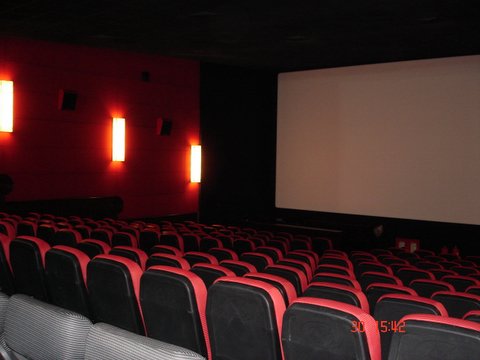
Picture courtesy of Flickr: https://www.flickr.com/photos/ajay_g/
The history of film began over a hundred years ago in the 1890s with the invention of the first motion-picture cameras. Since then, film making has become a multi-million dollar industry and most movie watchers can name a few films that have made them laugh or cry. Movies have become a large part of American culture, but why is movie watching such an emotional experience?
Amy Palowski, a Today Show contributor, interviewed Dr. Jeffrey Zacks to answer this question.
Zacks is a Professor of Psychology and Director of the Dynamic Cognition Laboratory at Washington University in St. Louis. He’s recently written a book entitled Flicker: Your Brain on Movies which examines how we have such powerful reactions to films.
An abbreviated version of the interview is below. The complete interview can be found here.
Q. How are filmmakers able to push our buttons?
A. One way that we perceive emotion in film is through I process I call the Mirror Rule, which says that it’s a good idea to mimic the visual input that you’re seeing. So if you walk up to somebody and they smile at you, it’s good to smile back.
If you watch somebody in the theater and there’s a smiling face filling the screen, most of the audience is going to pop a little bit of a smile.
When we’re smiling, we tend to feel happier. When we’re frowning, we tend to feel angrier. So that combination of the Mirror Rule and the reading of emotion by the brain off the current state of the body is enough to produce emotion.
In film, a filmmaker has the opportunity to integrate those things very tightly. He can control exactly what’s shown of the face and what else is present. And the viewer has much less opportunity to walk away or focus on other things.
Q. Why do we cry at movies?
A. You’ve got this facial mirroring that causes your face to wind up in a sad pose, and that evokes a sad emotion. You’ve identified with the character and you’re reasoning about the fact that they would be sad and that produces empathetic sadness in you.
Music plays a big role in emotion and film. Often, sad movies have slow minor key music at the points that they’re trying to get you to cry.
We encounter minor key music in real life, we see people who cry and we watch bad things happen to other people—all these things make us feel sad. But in a movie, you can crank those things up to 11. You can put a big crying face that fills up your whole visual field so there’s no other place to look.
You can set up situations that are most upsetting and put three of them in a film and then you can play sad music. You put all those things together and it’s just taking the mechanisms that we encounter in real life and just really pushing all the buttons at once.
Q. Do you think it’s easier to cry at the movies?
A. I’ve had that experience myself. In real life, I’m a pretty stoic person but I’ve been at movies that were not even good movies that had me bawling like a baby. Some of the emotional stimuli that we create in movies are supernormal stimuli.
Q. Is the same true for happiness?
A. Absolutely, but in both movies and in real life, the tragic thing is it’s a lot easier to make people sad than to make people happy.
For a review of the movie The Artist and what it teaches us about nonverbal behavior, take a look at this article written by Dr. David Matsumoto.
- « Previous Page
- 1
- …
- 269
- 270
- 271
- 272
- 273
- …
- 562
- Next Page »