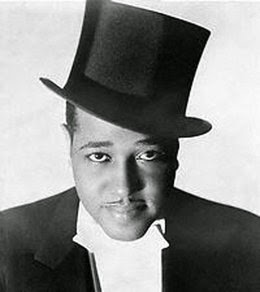
 Last year I discovered the work of Ken Burns. If that name is familiar it might be because of the notoriety he gained in the early 1990s with his PBS documentaries The Civil War and Baseball. I watched both and was fascinated! In addition to those I’ve passed considerable hours on the treadmill watching his documentaries on The West, The Dustbowl, Prohibition, The War (WWII), and most recently Jazz. In the Jazzdocumentary the famous musician Duke Ellington was interviewed and when asked about “the music of your people,” here is how he replied: “My people. Which of my people? I’m in several groups. I’m in the group of piano players. I’m in the group of listeners. I’m the group of people who have general appreciation of music. I’m in the group of those who aspire to be dilettantes. I’m in the group of those who attempt to produce something fit for the plateau. I had such a strong influence by the music of the people. The people, that’s the better word because the people are my people.”What struck me about Duke’s response was how he identified with so many different groups of people and how that undoubtedly allowed so many people to identify with him and his music. So often when we’re asked about ourselves we limit our view to a few defined and obvious categories. Much of that is defined by what we do (I’m a fireman, I’m in sales, etc.) or our role at home (mother, father, etc.). My question to you is this: Who are you? It’s important to understand for many reasons including when it comes to persuading others. That’s so because the more broadly you see yourself, the easier it will be to invoke the principle of liking. This principle of influence tells us people prefer to say, “Yes” to those they know and like. One way you can come to like one another person and have them come to like you is by sharing what you have in common.Here are a few ways I see myself: husband, father, son, brother, friend, businessman, salesman, influencer, trainer, coach, consultant, public speaker, reader, life-long learner, runner, weightlifter, martial artist, football fan, Ohio State Buckeye and Pittsburgh Steelers fan, Miami University and Dublin High School alumnus, Scotch lover, and child of God.As noted earlier, the more broadly I see myself the better my opportunity to connect with people because what we have in common (similarities) become starting points for relationships. Here are a few examples.When Ohio State beat #1 Alabama in the national championship semi-final, a game they were not expected to win, people were buzzing in Columbus. Everywhere you went it was a point of conversation and an easy way to talk to someone you didn’t know. I had a conversation with someone at a store that I can undoubtedly refer back to next time I see him.My wife, Jane, is from Pittsburgh and isn’t shy about talking to complete strangers about the Steelers when she sees them wearing some sports logoed item. You never know where a conversation may lead in terms of friendships or connections.When I do keynote presentations or conduct training sessions I regularly include influence stories about Jane and our daughter Abigail. Some people may not care how to influence others on the job but if they can get their spouse to take on a few more chores or get their kids to do their homework they’re all ears. Quite often people will talk to me afterwards about those personal stories, not business, because they see how persuasion can help on a personal level.I could give many more examples but you get the point. As human beings we’re all diverse and yet in our diversity we overlap with others in many more ways than we might have thought before. Duke Ellington clearly understood that and it’s a big reason his music was so well received by so many despite the racism he experienced during his lifetime. I encourage you to spend time thinking about who you are and the roles you have in life. That simple act could be enough for you to see more clearly what you have in common with someone else and might allow you to start forming a relationship through liking. And the good new is; if you need them to do something for you in the future, the more you’ve connected and bonded, the more they’ll like you and in turn will be more likely to say “Yes” to whatever you ask of them.
 Brian Ahearn, CMCT® Chief Influence OfficerinfluencePEOPLE Helping You Learn to Hear “Yes”.
Is your body language ruining your elevator pitch?
When I used to work in a startup accelerator I heard TONS of elevator pitches. The trend I started to notice was that although the message of the speech was put together well I was bored or even worse I didn’t believe or trust the speaker!
Mistake 1. Frozen hands
The best speakers use their hands frequently but what most entrepreneurs who haven’t been trained in public speaking do is keep their hands by their sides almost the entire time. In his book Winning Body Language Mark Bowden says”Dropping your hands and standing still in front of an audience causes your unconcious mind to wonder why you have made yourself a static target.” (P. 30)
So while most people who hold their hands to their sides think that it is helping to avoid distracting the audience what it is actually doing is initiating a freeze response in your body and wasting one of your biggest nonverbal assets.
So, what is the solution?
Use you hands to punctuate and demonstrate your main pointsTurn your palms up and raise your forearms in front of you to convey openness and trustworthinessMake a flat hand and do a single or double ‘karate chop’ to emphasize your belief in a point (really useful for statistics.)Steeple your hands when you want to appear credible and confidentMistake 2. Nervous rocking.
The second mistake many entrepreneurs new to public speaking make is that they sway left and right during their speech. This nervous gesture is a way to expend energy and shows the audience non-verbally that the speaker wants to get out of there as soon as possible!
Solution: plant your feet facing your audience, and if you get nervous take a few slow steps and re-plant.
Mistake 3. Staring into the ether.

I call this mistake staring into the ether because many new speakers will look at the wall at the back of the room in order to seem like they are looking at the audience while still avoiding eye contact. It doesn’t fool anyone though. I’ll admit, when I first started public speaking I was a HUGE offender in this area.
Solution, “Square gazing”
I call the solution circular gazing. Here is how you do it. Look at one person in the front left of your audience, and speak directly to them for 10-20 seconds. After that, move to the rear left, rear right, and front right. Keep moving slowly through this imaginary square looking at new people each time and you are sure to keep your audience engaged.
Mistake 4. The question inflection.
This one is for all you valley girl entrepreneurs out there
Speaking in uptalk undermines your message and makes you sound like you are questioning if what you are saying is true. In order to overcome this nonverbal nightmare work on giving your speech with the tone of instructing your audience to do something.
So now I want you to:
Leave a comment on this post. What body language tips are you going to implement into your elevator pitch
Share this article to someone you know who makes these mistakes, you can either share this link or if you are lazy (like me) Just click on one of the sharing buttons to your left.
Surprise Earthquake
KTLA Anchors dive under their news desk when a 4.4 Earthquake hit Los Angeles.
Take a look at the expression of surprise on the anchorman’s face!
Click here to view the embedded video.
Thank you to our affiliate Eric Goulard for first posting this video on his website!
Want to know why our eyebrows raise and jaws drop when we are surprised?
Find out in our MiX Professional Online Training!
- « Previous Page
- 1
- …
- 257
- 258
- 259
- 260
- 261
- …
- 562
- Next Page »