I travel a good bit and it seems to pick up each year. For example, last year I was away from the office half of the weeks during the year. Quite often my travel entails flying to and fro around the country.When it comes to air travel, I’m a Southwest guy through and through. Rarely am I late and I can’t recall a time when I didn’t make it to my destination the same day I was supposed to. Combine that with the best fares in the industry and people who seem to genuinely enjoy what they do and it’s a no brainer for me to choose Southwest each and every time.If you’ve flown Southwest then you know you have to check in 24 hours in advance. They have me trained better than Pavlov’s dog because I’m on their web site 24 hours ahead of my scheduled flight and check in the moment the clocks tells me it’s exactly 24 hours till take off. That usually gets me an A30 or better assignment which translates into sitting almost anywhere I want to.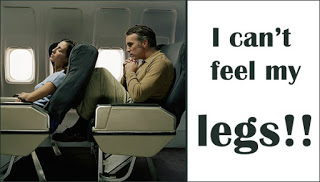 When I fly I typically have my iPad out to read or get my MacBook out once we’re airborne so I can work. And I’m not someone who throws their seat back so the person behind me has their legs up in their belly or their tray in their chest.Not long ago I went through my usual routine as I got on a flight and almost as soon as I sat down the flight attendant said, “Excuse me sir. You’re sitting in the row right in front of the exit row and that means you can’t recline your seat.” I replied, “That’s not a problem because I never recline my seat.”As soon as we started down the runway I began to think about not being able to recline my seat. The more I thought about it the more I was mentally kicking myself for not changing seats when I had the chance. Once in the air all I thought about was that I wanted to recline my seat. In fact, my mind obsessed over it!What was going on? After all, I almost never put my seat back so why was I so obsessed with wanting to do it on that flight? In a word – scarcity. The principle of scarcity alerts us to the reality that human beings want things more when they believe those things are rare or going away. To put it more succinctly; if we can’t have it, we want it. In the book Scarcity: Why Having so Little Means so Much the authors wrote, “Scarcity captures the mind. The mind orients automatically, powerfully, toward unfulfilled needs.” I didn’t “need” to put my seat back but as soon as I realized I couldn’t I wanted to.If you’ve raised kids you’ve no doubt seen this. As soon as you tell a child they can’t: Watch a particular movie it’s the only one they want to see.Listen to a certain song or artist and that’s all they want to listen to.Play with a toy and it’s the only one they want to play with.Eat or drink something and they want it all the more.Bottom line; deny something to someone and it’s natural that they’ll want it even more. It doesn’t matter if they need it, want it, or possibly have ever considered it before because scarcity changes how their brain views it.An effective persuader understands this and one other important factor. It’s not enough that something is rare, difficult to obtain or going away. The real key is that the other person becomes aware that what you’re offering is rare, difficult to get, or might go away soon.Disney is a master of this when it comes to marketing. For example, Snow White has been around since 1937 so how do you make people want a product that’s been around so long and is so easy to obtain? Change it ever so slightly, offer it for a limited time then throw it into the Disney vault. No one knows the combination and no one knows when the vault will open again. When it does open up you can bet your bottom dollar the whole cycle will repeat itself making people want Snow White once again.Sometimes scarcity causes us to buy things we don’t need or want because its pull on our mind is so strong. Having said that, scarcity was at play in my decision to marry Jane. After 10 months of on again, off again dating, I was talking to her in the break room (we worked together) during an “off” period and she told me how happy she was and told me even if I asked her out again she wouldn’t go out with me. Two weeks later we were engaged! Was I played? Maybe so because I didn’t need her but I sure wanted her and the thought of not having her was too much to bear!Hopefully this gives you a vivid picture of how scarcity works on the mind and causes people to take action. I’ll end with this; since that earlier Southwest flight I’ve flown a lot and not once have I put my seat back. Truthfully, it rarely enters my mind…until someone else brings it up.
 Brian Ahearn, CMCT® Chief Influence Officer influencePEOPLE Helping You Learn to Hear “Yes”.
When do the parts become the whole?
Here’s a conundrum that is essential in how we think.
Chimps Chuckle, Smile Much Like Humans Do: Photos
 By Jennifer Viegas for Discovery News
Laughs and smiles in chimps turn out to be far more human-like than previously thought and they date to at least 5 million years ago, suggests a new study on chimpanzee facial expressions and vocalizations.
Laughter is not 100 percent identical between the two primates, but people who hear a chuckling chimp usually have little trouble figuring out what the sound generally means.
Chimps go “h-h-h,” while humans sound more like “ha-ha-ha” or “he-he-he,” said Marina Davila Ross, a senior lecturer in the University of Portsmouth’s Department of Psychology and lead author of the study in PLOS ONE.
Then there is the flexibility of the sounds and related expressions.
“Chimpanzees, like humans, can produce their facial expressions free from their vocalizations,” Ross explained. “This ability is important for humans. For instance, it allows us to add a smile while talking or laughing, and we can also produce smiles silently. Until now, we did not know that non-human primates also have this ability.”
It’s even possible that the skills first emerged in the common ancestor of chimps and humans.
Read more on this fascinating topics and see more pictures here!
- « Previous Page
- 1
- …
- 217
- 218
- 219
- 220
- 221
- …
- 562
- Next Page »