Social Engineering Blogs

An Aggregator for Blogs About Social Engineering and Related Fields

The Humintell Blog July 13, 2015

What Facial Expressions Are Really Saying

Lot’s of research has shown that a look can speak volumes between two people. But how did facial expressions get started originally, and why? Why do they look they way they do? Why do people smile when they’re happy? Why do they wrinkle their nose and raise their upper lip when they’re disgusted? Why do they raise their eyebrows and lift their eyelids when they’re afraid. Why these specific muscle actions?

A study published in the journal Nature Neuroscience says that facial expressions — such as a frown of disgust — may actually have a purpose that goes beyond simple communication.
Filed Under: Nonverbal Behavior

The Humintell Blog July 10, 2015

FBI Law Enforcement Bulletin – New Article!

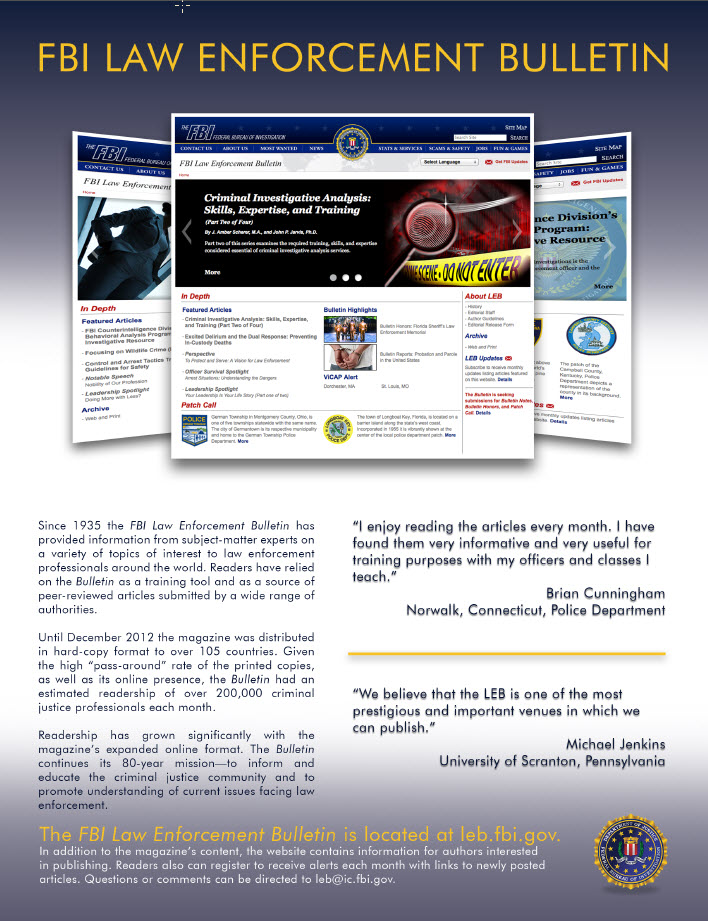
FBILEBHumintell is proud to be frequent contributors to the nation’s premier law enforcement publication, the FBI Law Enforcement Bulletin.

Since 1935, The FBI has provided information on current law enforcement issues and research in the field to the larger policing community through this publication. Today, the FBI Law Enforcement Bulletin remains one of the most widely read law enforcement-related publications in the world. It is distributed to law enforcement administrators in more than 105 countries and has an estimated readership of over 200,000 criminal justice professionals each month.

To view past articles featuring Humintell, please click the appropriate links below.

Evaluating Truthfulness and Detecting Deception
The Role of Violence in Predicting Violence
Reading People: Behavioral Anomalies and Investigative Interviewing
*NEW* Exploiting Verbal Markers of Deception Across Ethnic Lines: An Investigative Tool for Cross-Cultural Interviewing

Filed Under: Cross Culture, culture, Nonverbal Behavior, Science

The Influence People Blog July 6, 2015

When the Good Becomes Bad

Have you ever noticed how something good can slowly become bad? I’m thinking of things we start for good reasons that end up getting distorted and becoming bad. Here are some examples:In the Bible, the Pharisees, a religious sect of Judaism, aspired to be right with God. They knew the commandments but wanted to understand them more deeply. They knew “Thou shalt not work on the Sabbath” but wanted to understand exactly what work was. They set out to define it and laid a heavy burden on people in the name of God. It became work just to keep the law!Public schools have set standards for graduation because people thought our education system was slipping on the world stage. However, rather than bolster learning we started hearing about teachers “teaching to the test” and in some districts misrepresenting student scores.On the topic of school, grades are used to measure performance. After all, “What gets measured gets done.” Seeing a student with a high GPA is usually a good thing unless students are more concerned with the grade than what they’re learning. Faithfulness to marriage vows is a good thing. But what about couples who “stay together for the kids” and end up exposing them to a toxic environment at home? In business, bonuses are used to incent people to do certain things like increase profits or sales. Offering people incentives to work harder, longer or more creatively is good unless people begin to do some unethical things to hit the numbers.As I noted in the opening, many things start out with a good intention but end up getting perverted in some way as people lose sight of the original intention. So what are you to do? I believe we all need to understand why we’re asked to do what we do and occasionally we need to remind ourselves. I work in the insurance industry and I’m proud of that. Insurance isn’t a sexy industry like banking or financial investments but it’s every bit as necessary. When people ask me about what I do, I tell them I’m proud to be in insurance because we do two important things:We help people.If someone has a loss (car accident, home damaged, business destroyed) we step in to help them get back on their feet and lessen the financial burden they would face otherwise. No one ever said, “Darn my insurance agent for selling me the right coverages and limits” after a loss but many have said, “Darn my agent for not selling me the right coverages and limits!”We help the economy. What bank will lend you money to build a house or buy a building if you can’t guarantee to repay the amount in full if the property is damaged or destroyed? No financial institution would do that but with an insurance company promising to make that guarantee, money is lent, buildings are bought, which employs people to build them and building materials are sold. This creates a positive ripple throughout our economy. This brings me more specifically to what I do at work 9 to 5 and with Influence PEOPLE. I teach people how to ethically persuade others. The driving force for me in this endeavor is to help people professionally and personally. I believe:Professional successdepends in large part on your ability to get others to say yes to you. Sales are not made without getting to yes. If you’re a manger your success depends on your team buying into your vision and strategy – getting a yes! Even if you’re not in sales or management you’re asking people to do things all day long. Daniel Pink, author of To Sell is Humandiscovered through a survey of more than 7,000 business people that the typical non-sales employees spend upwards of 40% of their time trying to persuade others!Personal happiness is quite often a result of getting a yes. Most people I know find that life is more pleasant when their spouse, significant other and/or kids willingly say yes to them. Understanding how to ethically persuade others can go a long ways toward making this happen.If you’re like most people I’ve met, and including myself, then you may have things in life you started for the right reasons but may have “lost that loving feeling” and slowly slipped into a bad place. If that’s the case, step back and take time to remind yourself about who you are and why you choose to do what you do. If you can’t regain that old feeling and have the ability to let go of some things, then do so because you’ll enjoy what you pursue with passion more than what you have to drag yourself to do.Brian Ahearn, CMCT® Chief Influence Officer influencePEOPLE Helping You Learn to Hear “Yes”.

Filed Under: Influence, insurance, personal mission statement, Psychology, Science, State Auto Insurance

  • « Previous Page
  • 1
  • …
  • 213
  • 214
  • 215
  • 216
  • 217
  • …
  • 562
  • Next Page »

About

Welcome to an aggregator for blogs about social engineering and related fields. Feel free to take a look around, and make sure to visit the original sites.

If you would like to suggest a site or contact us, use the links below.

Contact

  • Contact
  • Suggest a Site
  • Remove a Site

© Copyright 2026 Social Engineering Blogs · All Rights Reserved ·