 Somewhat unsurprisingly, the movies have painted a highly inaccurate picture of the power of polygraphs, or so-called lie-detector tests. While many crime dramas showcase a seemingly miraculous technology for distinguishing truths from lies, this portrayal, itself, is far from true.
However, a new study published in the Journal of Clinical Psychiatry suggests that polygraph tests may yet have a role to play, alongside MRI machines and brain scans.
Subjects were asked to write down numbers and then lie to researchers about what they had written down. While being interrogated, each participant was subjected to both an MRI scan and a polygraph test, and the researchers attempted to evaluate when they were being lied to.
While the MRI test proved to be about 24 percent more effective than the polygraph, both tests employed in tandem were able to determine deception in almost every case: a remarkable achievement.
Previous studies on MRI testing found them to be up to 90 percent accurate, while the accuracy of polygraph tests ranged wildly from perfectly accurate to completely unreliable. Even 90 percent accuracy falls short of being reliable enough for criminal proceedings. However, with this study, the doors have opened towards justifying more research into lie detection testing.
As Dr. Daniel Langleben, a study author, said: “While the jury remains out on whether fMRI will ever become a forensic tool, these data certainly justify further investigation of its potential.”
In order to appreciate the significance of this study, it is important to understand the limitations that both MRI machines and polygraph tests face in detecting deception.
MRI machines generate images of the subjects’ brains. These images allow researchers to see any physical abnormalities or changes in blood flow, revealing which parts of the brain are currently active. Some of the earliest studies on MRIs as lie detectors had subjects select playing cards and then lie about which ones they had picked. This helped narrow down which parts of the brain light up when a person is being deceitful.
However, there may be confounding factors, as these MRI images often just reveal when the subject has to think quickly about how best to respond. While this does detect lies, it may also indicate uncertainty, or it could be easily misled by a well-rehearsed story that took no effort to recite.
Based on this uncertainty, every attempt to introduce MRI-based lie detection as evidence in court proceedings has failed. In fact, they often show false signs of deception, which would be a major flaw in court proceedings.
Polygraph tests, on the other hand, work by tracking the subject’s heart rate, blood pressure, respiration, and other physiological responses. Law enforcement personnel ask “control” questions that are only tangentially related to the investigation at hand, as well as “relevant” questions which probe for details on the subject’s involvement in the crime.
If the subject shows a higher heart rate when asked the “relevant” questions, this indicates that they are attempting to conceal their guilt. However, there are significant underlying problems with this approach. In fact, there is little evidence to show that these physiological responses are even unique to the practice of deception.
Between the theoretical flaws and the fact that polygraphs can be outsmarted, it is understandable that they are currently not admissible in court proceedings.
For more information on polygraph tests, read our blog here. Also, check out this post to learn how you can be a better lie-detector.
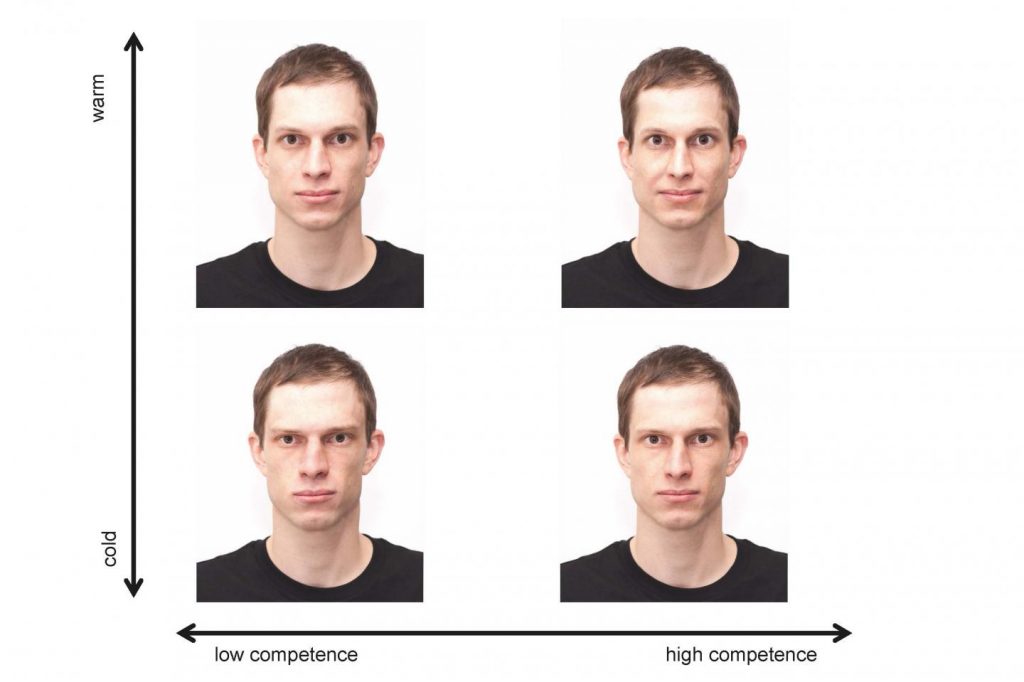 People are often excluded from social groups. As researchers from the University of Basel in Switzerland report in the Journal of Experimental Social Psychology, whether uninvolved observers find this acceptable or not may depend on the facial appearances of those excluded. The exclusion of cold and incompetent looking people is more likely to be accepted.
 By Melanie Tannenbaum for Scientific American