A recent study published in Scientific Reports studied the association between childhood trauma and emotion recognition.
Their results showed that childhood trauma alone was significantly associated with emotion recognition accuracy when exploring stimuli intensity, modality, and emotion.
Furthermore, when researchers controlled for psychopathy and alexithymia, childhood trauma was significant only when exploring the emotion portrayed.
The Importance of Emotion Recognition
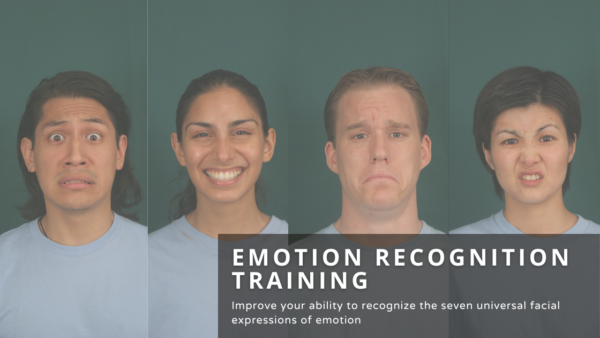
IMPROVE YOUR EMOTION RECOGNITION ABILITY
Emotion recognition refers to the ability of humans to identify emotional states and is crucial in daily interactions and relationships. Expressing emotions forms the core of social interactions, facilitating appropriate responses in social situations.
Research has suggested that individuals who have better emotion recognition skills have better social adjustment, better school performance, and even better workplace success across a wide range of industries and job types.
Past research also suggests that experiences of childhood trauma such as neglect or abuse are one factor that has been associated with poorer emotion recognition skills. However, the breadth of these effects and their relationship with individual differences remain unclear.
What is Alexithymia?
According to Psychology Today, alexithymia, also known as emotional blindness, is a personality feature in which a person has difficulty experiencing, identifying, understanding, and expressing their emotions.
This can be influenced by several factors including genetics, past experiences, and certain medical conditions.
Current research suggests that about 50% of people with autism have alexithymia, compared to 10-13% of the general population. Men tend to experience alexithymia more than women.
Definition of Childhood Trauma
The researchers defined childhood trauma as exposure to actual or threatening behavior, serious injury, or sexual violence, and encompasses both neglect and abuse.
Childhood trauma has been associated with heightened emotional reactivity, low emotional awareness, and difficulties in regulating emotions. Childhood trauma is also associated with differences in recognizing others’ emotions; however, these are not uniform.
Studying Childhood Trauma and Emotion Recognition
In their study entitled “The association between childhood trauma and emotion recognition is reduced or eliminated when controlling for alexithymia and psychopathy traits”, Cooper, H., Jennings, B.J., Kumari, V. et al explored the effects of childhood trauma on emotion recognition ability.
122 participants over the age of 18 were recruited from an online site and an undergraduate course. Variables of individual differences were childhood trauma, psychopathy, and alexithymia.
Participants completed the following questionnaires:
- 28-item childhood trauma questionnaire short-form (CTQ-SF), a widely used retrospective screening tool for childhood maltreatment in adults.
- 29-item self-reported psychopathy scale short-form (SRP-SF), used to measure psychopathic traits
- 20-item Toronto alexithymia questionnaire (TAS-20) that measures difficulty in identifying and describing emotions
Total scores from these questionnaires were standardized and used for analyses.
For emotional tasks, stimuli were selected from a database containing clips of actors expressing six of the seven basic emotions (happy, angry, sad, surprise, disgust, and fear) and a neutral condition across three modalities (audiovisual, face, and voice).
Emotional stimuli were presented at normal or strong intensity. A silent video of actors expressing a neutral or emotional expression was presented in the face modality.
Participants listened to an audio clip in the voice condition, while in the audiovisual condition, a clip with both video and audio was presented. They specified the emotion expressed in the clips.
The experiment was run online in four blocks
- Personality questionnaire
- TAS-20 and face task
- SRP-SF and voice task
- CTQ-SF and audiovisual task
The effect of childhood trauma alone on emotion recognition ability was examined using generalized mixed models and additionally controlled for psychopathy and alexithymia.
Study Results
In the model with childhood trauma and modality as fixed factors, there was a significant main effect of childhood trauma and modality. However, the effect size was small. The team found that higher childhood trauma was associated with poorer emotion recognition ability.
Accuracy was significantly better for audiovisual emotions than vocal and facial emotions. Interestingly, when controlling for psychopathy and alexithymia, childhood trauma was no longer significant.
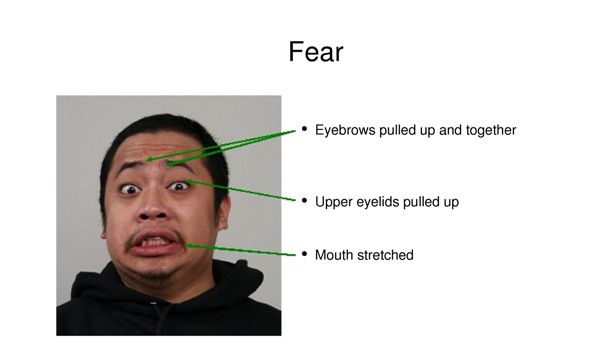
The accuracy was significantly different between fear and neutral expressions; expressions of fear had significantly poorer accuracy. Notably, childhood trauma remained significant after controlling for psychopathy and alexithymia, with a significant main effect of emotion portrayed.
No significant interaction was observed between childhood trauma and the emotion portrayed, suggesting no variations in the effect of trauma across emotions.
Study Conclusion
 The authors suggest in their paper that the relationship between childhood trauma and emotion recognition accuracy, when exploring intensity, may be significantly influenced by other related factors – in this case alexithymia.
This further enhances our understanding of the relationship between childhood trauma and emotion deficits.
In addition, childhood trauma alone had a significant association with emotion recognition ability when exploring modality, emotion portrayed, and intensity. More experience of childhood trauma was associated with poorer accuracy.
The authors emphasize in their conclusions that when controlling for alexithymia and psychopathy, childhood trauma only had a significant association with poorer accuracy when exploring emotion portrayed. This illustrates the importance of including and controlling for interrelated individual differences.
It may suggest that present theories involving childhood trauma and emotion deficits may need to account for factors such as higher levels of alexithymia and psychopathy traits in the groups being studied.
References
Cooper, H., Jennings, B.J., Kumari, V. et al. The association between childhood trauma and emotion recognition is reduced or eliminated when controlling for alexithymia and psychopathy traits. Sci Rep 14, 3413 (2024). https://doi.org/10.1038/s41598-024-53421-5
The post The Link Between Childhood Trauma and Emotion Recognition first appeared on Humintell.
 The study included 280 healthy adult participants who were randomized to an 8‐minute anger recall task, a depressed mood recall task, an anxiety recall task, or an emotionally neutral condition.
 This is not the first study to suggest that the emotion of anger could affect your health.
 When we think about potentially destructive emotions, we often think about anger. And for good reason.
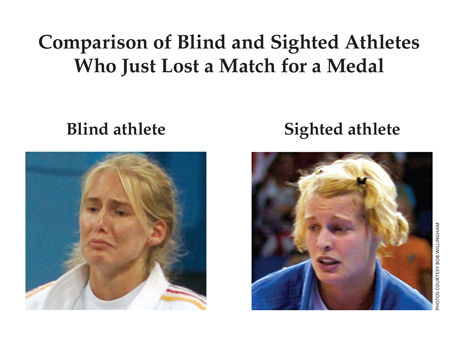 They discuss Dr. Matsumoto’s famous Olympic Judo Study entitled