
© Malsveta | Dreamstime.com – Mother And Daughter Gentle Hug Photo
If you ask most mothers, they would probably tell you that they speak to their daughters and sons the same way, but research is now suggesting that that isn’t true.
A new study published in The British Journal of Developmental Psychology featured the research of Ana Aznar and Harriet Tenenbaum. Through their study, they concluded that mothers are more likely to use emotional words and emotional content when speaking with their 4-year-old daughters than with their 4-year-old sons.
As described in a recent Time Magazine article, “In this new study, researchers videotaped 65 Spanish mothers and fathers along with their 4-year-old and 6-year-old children during a storytelling task and then during a conversation about a past experience. The subjects lived in middle-to-upper-class neighborhoods. On the first visit, the mother or the father and the child were taped in conversation. Within a week, the other parent and the child came in and talked about a similar subject. The videotaped conversations were transcribed and emotion words like “happy,” “sad,” “angry,” “love,” “concern,” and “fear,” were singled out.”
The results? Mothers used a higher proportion of emotional words than fathers did with both 4 and 6-year olds, which is consistent with studies performed in the U.S. However mothers were particularly expressive with their 4-year old daughters. In addition, although fathers didn’t use as much emotional language, they used more with their 4-year-old daughters than with their 4-year-old sons.
Why do mothers use more emotional language than fathers? One theory is that mothers may be more comfortable talking about their emotions than fathers. Children might therefore think it is more appropriate for girls to talk about feelings. In fact, daughters were more likely than sons to speak about their emotions with their fathers when talking about past experiences.
Time Reports, “Aznar and Tenenbaum did a few things in this study that made it different from previous ones. They added fathers to the equation, when most studies looking at emotions have focused only on mothers, and they examined Spanish families, which hadn’t been looked at before, because they wanted to see how patterns played out across different cultures.
And most importantly, the authors tested the children to determine their baseline emotional comprehension. They quizzed them on what people in various situations might be feeling and found that emotional understanding was the same for 4-year-old boys and girls. Thus, emotional intelligence is not an innate quality of females. Since the pretest didn’t show that 4-year-old girls understand emotions any better than boys, the fact that parents talk in more emotional terms to daughters over sons can’t be explained away by saying parents do this because they believe girls understand emotions better. “We didn’t find any difference in the children’s understanding of emotions in the pretest,” says Tenenbaum.
Are parents perpetuating stereotypes? “Most parents say they want boys to be more expressive, but don’t know [they] are speaking differently to them,” Tenenbaum says.
Parents should try to teach boys about emotion as much as possible, says Tenenbaum, and use emotion-laden language with both sons and daughters. “We are beyond the point in society where boys are taught never to express emotions,” she says. “We need to model for them how to appropriately express emotions. These are learned stereotypes and we are reinforcing them as a society.”
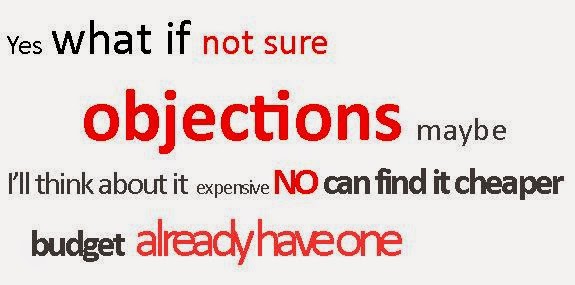 “Let me think about it” and “Your price is too high” are two phrases salespeople dread. They’re perhaps the most often cited objections put out by prospects during the sales cycle. As I noted in closing last week, it’s not often a sale is made without resistance. Objections might come after your presentation or they could be peppered throughout. This week we’ll look at some principles of influence that can be very helpful in overcoming objections.Two principles that are particularly useful are consensus and authority. They’re the ones to focus on because more than any other principles they help people overcome uncertainty and that’s the root of most objections. We’ll also touch on the contrast phenomenon because it’s particularly useful to demonstrate your offering is actually a better deal than the prospect might believe. You may have heard the old saying, “The devil you know is better than the devil you don’t.” What that means is, as bad as things may be sometimes, there’s always the chance they could be worse with change. That fear of change is always in the back of the prospect’s mind, especially with big-ticket purchases. Below are a few thoughts prospects may have as you present. In fact, you may have held some of these very thoughts last time you bought something expensive. Will it last?Will it perform as advertised?Will it be worth the extra money?Will I regret this decision down the road?Can I really believe the salesperson’s claims? The challenge for the salesperson is to uncover the real objection. For example, when it comes to, “Let me think about it,” there may be something underneath that statement. Perhaps the prospect met with another salesperson and kept their appointment with you only because they said they would. It’s okay to ask, “What specifically will you be mulling over? I ask because I might be able to answer some questions for you right now to make the decision easier for you.” People generally don’t like confrontation so it’s easier to avoid it by saying, “Let me think it over.”Let’s start with price. When it comes to price I tell people, “There’s nothing high or low but comparing makes it so.” If someone says your price is too high it’s because they are comparing it to something else. Your challenge is to find out what they’re comparing your price to and then to reset the comparison point so they’ll see your offer is actually a better value. The contrast phenomenon comes into play because what you present first will make the difference in how they perceive the next item presented.The principle of consensus, that desire we have to move with the crowd, can help deal with objections. You never want to tell someone they’re wrong because that will only produce resistance. A better approach would be to incorporate consensus through the “feel, felt, found” approach. An example might go like this:“I understand how you feel because other customers have felt the same way initially. However, here’s what they found…” Then you go on to show them what others discovered. It might be the realization that a higher price, say 10%, is worth it because the product life is 20% longer. Getting 20% more product for only 10% more money makes for a better value!When we’re in a state of uncertainty making a decision is a lot easier when an expert tells us what to do. Establishing your expertise early on in the prospecting phase makes this much easier. That’s using the principle of authority. You can defer to this casually:“Ann, as I told you when we first met, I’ve been doing this for 25 years and I can tell you…”Maybe you don’t have that much experience or the credentials just yet in order to be viewed as an expert. You can still refer to others who are experts and you can share various facts to support your case.“Bill, there’s a reason Consumer Reports has rated this product #1 for the past three years.”“Sarah, several independent studies show…”Dealing with objections isn’t something most salespeople look forward to but there’s good news. First, most of the time people who throw up objections are engaged in the sales process and that means you still have a shot at making the sale. Second, if you’ve been in your role for any length of time you probably know 80% or more of the objections you’ll face. That being the case, you should be ready to answer those objections each and every time. Give thought to the proper responses, utilize the psychology or persuasion, then drill on the proper responses until they roll off your tongue in a very natural way.Even if you successfully handle all the objections and the prospect clearly wants to do business with you the sale might not be a foregone conclusion. It’s very likely you’ll find yourself negotiating over price, terms, conditions or other items related to your product or service. The next post will look into which principles of influence will help you negotiate most effectively.
 Brian Ahearn, CMCT® Chief Influence Officer influencePEOPLE Helping You Learn to Hear “Yes”.