Social Engineering Blogs

An Aggregator for Blogs About Social Engineering and Related Fields

The Humintell Blog May 12, 2023

A Tribute to Law Enforcement Officers

Guest Blog Post by Anthony “Tony” Ciaburro

The month of May (Law Enforcement Appreciation Month) is when we pause to remember our fallen officers.

As I reflect on those whose names are on the National Law Enforcement Officers Memorial, I take comfort knowing that our profession remains undaunted.

The last few years have been the most difficult in the history of policing. Covid-19, a crisis of confidence following the murder of George Floyd, increased victimization and appropriate demands for elevated professionalism did not deter those who police.

The profession, the most highly trained and professional in history, remained dogged, determined, and on-duty.

We cannot bring back those who are now under the watchful eyes of the lions in our Nation’s Capital. Nonetheless, we can honor them by policing in noble fashion. Those who perished would want their colleagues to continue serving with dignity.

I cannot think of any profession which is more accessible. The evolution of technology has shown the positive and negative of policing.

There is no other job held to the same level of scrutiny. (Professional sports don’t count; what is being weighed on the scales of justice is not instant replay entertainment.)

Nonetheless, policing continues.

I was already a command officer when body worn cameras (BWCs) appeared in the field. How officers adapted and continued to work despite every word being recorded is admirable.

What other occupation must work under these conditions? Better said, which occupation works under these conditions and has embraced and excelled like law enforcement?

The entire use of force paradigm has changed over the past few years. Police, politicians, and those in our communities all demand and expect increased professionalism especially regarding use of force.

In reviewing use of force, I was in awe of the patience of officers and their precision. Officers would communicate calmly and use force when it absolutely appeared all options were exhausted. The shift is stunning.

When I started, delaying was considered indecisive and perhaps an indicator of low officer confidence or courage. De-escalation is now the norm and certainly more difficult.

If one watches the recordings of incidents, they will hear the officers discussing the sound tactics consistent with societal demands. In reality, officers do everything they can to avoid using force.

Modern police work is full of facets. There were always specialists as opposed to the generalist patrol officer. Nonetheless, the ever-growing areas of technical expertise are remarkable.

Interview and interrogation training like Humintell offers, field tactics, improved electronic optics for service weapons, expanding cell phone and computer technologies are part of the everyday ways to do business.

When officers would brief me on a case or explain to me why they needed a certain piece of equipment or approval for a training class, regardless of whether I could understand them, I deeply appreciated their vigor. They wanted to do their job better in a more transparent manner.

The laws have also changed. Miranda is more complicated. The age of the offender is important. In aggregate, today’s officers have many more factors to consider while gathering facts; therefore, they must have high intellect.

Despite continued admirable success against ever demanding and changing conditions, the numbers of those entering the profession are fewer. Recruiting and retention is a topic amongst all chiefs.

Pay, benefits, and mental health services must adjust to these market conditions. Competitive compensation, choices and a culture of competency are the foundation for success. Compensation must be meaningful and signal the employer’s intent and mindset of appreciation towards law enforcement.

Officers need fulfilling careers. A variety of challenges, i.e., assignments or choices is necessary.

Finally, culture is key. A well run and fair department in all aspects fosters retention and in turn, recruitment. Yes, the officers of today will change departments. They should not have to stay if their employment is somehow lacking.

*

Anthony “Tony” Ciaburro spent nearly 34 years in law enforcement. Tony started in 1989 at the San Jose Police Department and worked a variety of assignments until retiring as a captain in 2015.  Tony then became a captain at the East Bay Regional Park District Police Department and promoted to the Assistant General Manager of Public Safety (AGM)/Chief of Police in 2017. As the AGM of Public Safety/Chief of Police, he  had Police, Fire, and Lifeguard Services under his command.   Tony is a fluent Spanish Speaker who embraces a philosophy of “Good to Great,” is a graduate of San Jose State University (MS & BS), the FBI National Academy (Class 245) and PERF’s SMIP.  

The post A Tribute to Law Enforcement Officers first appeared on Humintell.

Filed Under: General

The Humintell Blog April 19, 2023

Does Music Elicit Universal Emotional Responses?

It’s no mystery that major and minor chords in western music makes us feel good. But could this be because of an evolutionary trait?

Recent research led by Eline Adrianne Smit and colleagues from the MARCS Institute for Brain suggests this could be the case.

Turn to any major pop radio station in the Western world and you’ll likely recognize some familiar features in the songs including:

  • A formulaic structure
  • Themes of romance
  • A catchy melody in a major scale
  • A song less than three and a half minutes

These unique features of modern music are designed to make the audience feel good, so we listen on repeat. But why do these songs make us feel good?

For the last few decades, psychologists have wondered if there are features to music that elicit universal emotional responses in humans.

Could certain elements of music be hard-wired into the human central nervous system?

A Musical Study

A recent study tested how different communities with varying levels of exposure to Western music would respond emotionally to major melodies and minor melodies. According to Discover Magazine, “At least in Western cultures, major and minor melodies and harmony heavily influence emotional responses to music. Major chords and progressions are associated with positive emotions, and minor chords and progressions are associated with negative emotions.”Smit and colleagues asked musicians and non-musicians in Sydney, Australia as well as different communities from Papua New Guinea with varying degrees of exposure to Western music, to associate major and minor melodies with either happiness or sadness.

The Results

The researchers found that the degree of familiarity with Western music corresponded with the association between major melodies with happiness, and minor melodies with sadness.

While this association was present for some groups in Papua New Guinea, researchers did not find evidence for this association in the community that was the most remote.

This study suggests that familiarity through cultural exposure plays and important factor when associating major and minor melodies with happiness and sadness respectively.

Interestingly, major chords tend to appear more frequently than minor chords in popular music and research shows that humans are likely to attribute positive emotions to things that we are familiar with.

Universality in Music?

Lead researcher Smit also thinks there could be some associative conditioning at play. She makes the important point that people typically don’t listen to music in isolation. Instead we listen to music that fits the context of our situation.
For example, we would usually hear major music at an event like a wedding, whereas we might hear minor music at a funeral.

If specific features of music are combined with emotionally laden events often enough, then we will likely associate that musical feature with that specific emotion.

Some psychologists have suggested that music was a sort of social glue in our evolutionary history, helping to facilitate the development of humans as a deeply social species.

While this study does support that culture reinforces the association between major and minor melodies with happiness and sadness, Smit does note that, “there is still absolutely the possibility that particular aspects of music might be universal.”

Universal Emotions in Music

In similar research conducted in 2016, Psychologist Heike Argstatter sought to determine whether universal basic emotions are recognizable in music across cultures.

This study built on her previous research which found that, within one Western culture, both trained musicians and laypeople consistently categorized the same musical sequences into categories based on the same basic emotions.

Dr. Argstatter then sought to extend these findings to audiences in disparate cultural settings.

The results? Dr. Argstatter found evidence that all participants, regardless of culture, would identify the same emotions in the same pieces of music. This was especially true for happiness and sadness.

The post Does Music Elicit Universal Emotional Responses? first appeared on Humintell.

Filed Under: Emotion, Science

The Humintell Blog March 23, 2023

Disgust and Fear Linked To More Acidity In Stomach

We’ve all experienced “gut feelings” but a new study out of Sapienza University supports the idea that these feelings could be tied to physiological changes. Researchers in Rome investigated how emotional states such as disgust and fear could affect acidity levels in the gut.


The Methodology

Giuseppina Porciello and her team asked 31 men whose average age was 24 to take a pill that measures pH levels in the gut.

The men then watched videos that elicited feelings of disgust, fear, and happiness while the pill sensor travelled down their gastrointestinal tract.

After watching each video, the men completed a questionnaire to rate the intensity of their emotions.


The Results

After watching the videos that elicited feelings of disgust and fear, the participant’s stomach pH level wasmore acidic than it was at a baseline measurement.

Those with the most acidic pH reported feeling the most disgusted and fearful. It is unclear whether a particularly acidic stomach heightens these emotions or if experiencing these emotions results in more acidity.

The participants who reported feeling happy, regardless of the video they watched, had a less acidic pH in their stomach.

Porciello and her team are now carrying out a similar study on female participants.


The Brain/Gut Connection

This research reinforces models that suggest the gastric network plays a major role in our body’s emotional responses.

As stated by the Harvard Medical School, the gastrointestinal tract is sensitive to emotion. Anger, anxiety, sadness, elation — all of these feelings (and others) can trigger symptoms in the gut.

The brain has a direct effect on the stomach and intestines. For example, the very thought of eating can release the stomach’s juices before food gets there.

Feeling disgust in the pit of your stomach isn’t unusual. In fact, self-reported ‘body maps’ of emotions often associate negative emotions with the gastric system.

It’s not just a mental thing either – recordings of the electrical activity in the gut’s muscular wall also reflect our experiences of revulsion.

Our bodies appear to be driven to ramp up gastric activity when we experience things we ought to stay clear of, evoking a sense of nausea.


Universal, Psychological Themes

It’s important to remember that research has demonstrated that, despite many differences (and similarities) in the specific types of events that trigger emotions in us, there are universal, psychological themes associated with each of the seven universal emotions – anger, contempt, disgust, fear, happiness, sadness, and surprise.

A psychological theme is the basic, most elemental way in which our minds process and evaluate any event in terms of what the event means to us psychologically. These themes are mostly concerned with our welfare.

The fact that there are universal, psychological themes associated with basic emotions means that the same underlying, psychological themes trigger the same emotion in all humans around the world, regardless of differences in race, culture, nationality and any other demographic characteristic.

So what are some quick descriptions of themes for the basic emotions of disgust and fear?

Disgust – Contamination

Disgust is triggered when our minds appraise something that is dirty, rotten, offensive, or contaminated.


Fear – Threat

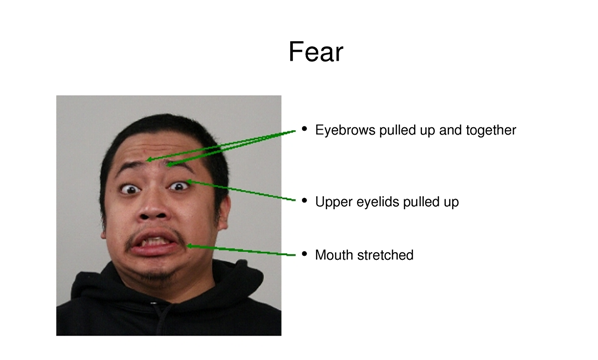
Fear is triggered when our minds appraise something as threatening, or potentially threatening, or sense of self. The sense of self that is threatened can be our physical self as well as our psychological self.

To see the other triggers for universal emotions click here.

The post Disgust and Fear Linked To More Acidity In Stomach first appeared on Humintell.

Filed Under: Emotion, Science

  • « Previous Page
  • 1
  • …
  • 15
  • 16
  • 17
  • 18
  • 19
  • …
  • 279
  • Next Page »

About

Welcome to an aggregator for blogs about social engineering and related fields. Feel free to take a look around, and make sure to visit the original sites.

If you would like to suggest a site or contact us, use the links below.

Contact

  • Contact
  • Suggest a Site
  • Remove a Site

© Copyright 2026 Social Engineering Blogs · All Rights Reserved ·