I think that Priming is one of the best psychological principles out there.
To explain what it is, first you need to understand the difference between Concious mind and Subconscious mind.
Your conscious mind is everything that you are aware of and can control. How your body moves, your thoughts.
Your unconscious mind is far more developed and can do much more complex tasks than the conscious because it is older (and therefore more developed). It controls all your organs, muscles, everything you are NOT aware of.
You swing between consciousness and unconsciousness all the time. When you wash your hands, you don’t think about it. Instead you think about what are you going to eat for lunch. It’s the same as breathing, you can control it if you want to, but if you don’t your body does it automaticaly.
When you walk you could think about your every movement you do so you don’t fall, or you can let your unconscious mind take care of it.
The more you do one particular task the less you have to think about doing it.
A great example of how potent a force your unconscious can be was detailed by researchers Chen-Bo Zhong and Katie Liljenquist They conducted a study in which people were asked to remember a terrible sin from their past, something they had done which was unethical. The researchers asked them to describe how the memory made them feel. They then offered half of the participants the opportunity to wash their hands. At the end of the study, they asked subjects if they would be willing to take part in later research for no pay as a favor to a desperate graduate student. Those who did not wash their hands agreed to help 74 percent of the time, but those who did wash agreed only 41 percent of the time. According to the researchers, one group had unconsciously washed away their guilt and felt less of a need to pay penance.
When a stimulus in the past affects the way you behave and think or the way you perceive another stimulus later on, it is called priming.

Everything you perceive sets off a chain of related ideas. Pencils make you think of pens. Blackboards make you think of classrooms. It happens to you all the time, and though you are unaware, it changes the way you behave.
Another study conducted by Aaron Kay, Christian Wheeler, John Barghand, and Lee Ross. In this study people were separated into two groups and asked to draw lines between photos and text descriptions. One group looked at neutral photos. They drew lines to connect kites, whales , turkeys, and other objects to descriptions on the other side of the paper. The second group connected lines to descriptions for photos of briefcases, fountain pens, and other items associated with the world of business.
After that the particpants were sent to an isolated room and paired with another “participant“ who was actually hired actor. Then they were told they are going to play a game where they could earn up to $10. The researchers presented the subject with a cup and explained that in it were two strips of paper, one with word “offer“ written on it and other with the word “decision“. They could then either blindly pluck a slip of paper from the cup, or allow the other person to blindly select.
Whoever pulled out the “offer” slip would get the $ 10 and choose how it was divided between both parties. The partner would then choose to accept or reject the offer. If the partner rejected, both received nothing. This is called the ultimatum game, and its predictability has made it a favorite tool of psychologists and economists. Offers below 20 percent of the total amount are usually turned down. Most people chose to do the picking. They didn’t know both slips had “offer” written on them. If they instead let the other person do the picking, the actor pretended to get the “decision” slip. So everyone in the study was put in the position of making a reasonable offer, knowing if they did not, they would miss out on some free cash.
The results were bizarre, but confirmed the scientists’ suspicions about priming. So how did the two groups differ? In the group who connected neutral photos to their descriptions before the ultimatum game, 91 percent chose to split the money evenly— $ 5 each. In the group who connected the business photos, only 33 percent offered to split the money evenly, the rest tried to keep a little more for themselves.
The researchers conducted the experiment again with real objects instead of photos. They had participants play the ultimatum game in a room with a briefcase and leather portfolio on the far end of a table along with a fountain pen in front of the participant’s chair. Another group sat in a room with neutral items— a backpack, a cardboard box, and a wooden pencil. This time, 100 percent of the neutral group chose to split the money evenly, but only 50 percent of those in the group sitting in a room with business-related items did the same. Half of the business-primed group tried to stiff the other party.
All of the subjects were debriefed afterward as to why they behaved as they did, but not one person mentioned the objects in the room. Instead, they confabulated and told the researchers about their own feelings on what is and is not fair. Some described their impressions of the people they were playing the game with and said those feelings influenced them. Mere exposure to briefcases and fancy pens had altered the behavior of normal, rational people. They became more competitive, greedier, and had no idea why. Faced with having to explain themselves, they rationalized their behavior with erroneous tales they believed were true.
Wow, that’s typical of most people, wouldn’t you say?
Did you enjoy this article? If you did, remember to come back tomorrow to learn how to use this to read peoples minds.
The post Priming appeared first on Social Engineering.
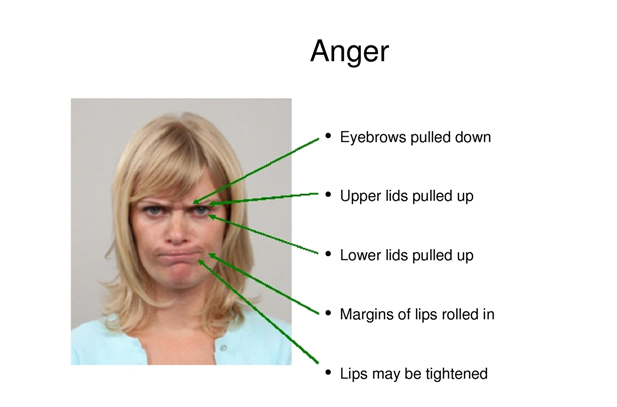 Cool your jets! A new study published in The European Heart Journal Acute Cardiovascular Care suggests that having an episode of intense anger was associated with an 8.5 times greater risk of having a heart attack during the following 2 hours.