Social Engineering Blogs

An Aggregator for Blogs About Social Engineering and Related Fields

The Humintell Blog March 19, 2015

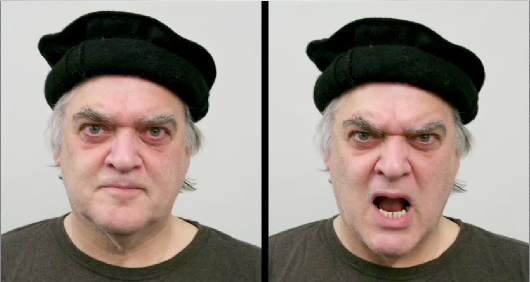
The Origins of the Anger Face

Angery Face - Anger:  Does it motivate us - Humintell The anger face: brows pulled down, upper and lower eyelids pulled up, lips rolled in and tightened. No matter where you go in the world, the facial expression of anger is expressed universally across all people of all cultures. Anger is one of the seven basic emotions along with sadness, happiness, contempt, disgust, fear and surprise.

The expression of anger is made by individuals who have been blind since birth, a fact used by psychologists to argue that this emotion (as well as the other basic emotions) are innate rather than learned. New research now suggests that anger serves a specific purpose: on its own, each aspect of the anger face may make its wearer physically stronger.

As mentioned in The Atlantic, “a study recently published in the journal Evolution and Human Behavior, Dr. Aaron Sell of Griffith University in Australia and his colleagues from UC Santa Barbara tested the effect of each feature of the anger face on a person’s overall appearance, using seven previously identified components of anger: Along with changes to the nostrils, lips, and chin, the brow and brow ridge both lower and the cheekbones and mouth both raise.

Starting from a computer-simulated image of a 20-year-old man, the researchers created pairs of faces for each of the seven features—one face neutral, one face with the anger-related change—and asked volunteers to assess each one for physical strength. Across the board, the faces with a single feature activated—neutral except for flared nostrils, for example—were rated as belonging to stronger men.

One reason for this link, Sell says, may be because of the increased leverage that fighting ability afforded our ancestors in resolving conflicts of interest: The more physically threatening a person looked, the more bargaining power they had to influence the outcome of a given situation. “The reason natural selection designed [the anger face] is that the individuals who made that face out-reproduced the other ones,” he explains. “And they out-reproduced them because the people who made that face won their conflicts. The other people backed down because they looked at them and thought, ‘Wow, he looks really tough.’”

The concept of aggression as an assertion of the upper hand has been well-documented in scientific literature, and anger faces are thought to be more easily identified than other expressions of emotion, allowing for more efficient responses to perceived threats. Previous research from Sell has also found that both genders can more readily identify expressions of anger on men—who are more likely to be aggressors, evolutionarily speaking—than on women, and that men with greater upper-body strength and more attractive women—two groups that, in the early days of humanity, would have had increased bargaining power—may also be quicker to anger than their weaker or less attractive peers”.

For more information on the evolutionary vestige of the anger face as well as all the other seven basic emotions, take a look at our MiX Professional and MiX Elite online training programs.

Filed Under: Science

The Influence People Blog March 16, 2015

The Psychology of the Sales Cycle – Presentation

You’ve made it through your first meeting and perhaps subsequent meetings with the prospect. These meetings were designed for you to build rapport, learn what the prospect needs and what it will take to land his/her business. Now comes the big day; your opportunity to present.Just for clarification; I use the term “present” when you’re sharing intangibles such as insurance, accounting and other services. When you have a tangible product where you show how it works or involve the prospect, I call that a demonstration. Either way, it’s your chance to build compelling reasons why the prospect should choose to do business with you and your company. Here are a few things to keep in mind: Don’t talk yourself out of the sale – You might have 10 items to cover but if you sense prospects are satisfied after hearing their top three issues addressed, cut it short and ask if they’d like to get to the paperwork. Poor salespeople have a tendency to talk themselves out of the sale during this part of the sales cycle. Here’s a visual from the movie Jerry McGuire, when Tom Cruise made a long speech to Renee Zellweger asking her to marry him and she said, “You had me at hello.”Involve the prospect – If possible have the prospect handle your product as you demonstrate it. If not, make sure you ask plenty of questions to keep the prospect mentally involved. What you don’t want to do is drone on and on in a monologue because the prospect will tune you out. The two principles of influence you want to focus on during this phase are consistency and scarcity. Both of these principles are great when it comes to motivating people to action. Let’s take a look at why.The principle of consistency alerts us to this reality; we feel internal psychological pressure and external social pressure to be consistent in what we say and what we do. This is why it’s so important to ask the right questions during your initial meetings. Perhaps the most important question is something like this: Exactly what will it take for me to earn your business?This is not only important because of consistency but also because you might learn some things that you know you can’t come through on. If that’s the case, let the prospect know you won’t be able to help them and move on to another prospect where you might be able to help.Scarcity highlights the human tendency to want things more when we believe they are rare, going away or can’t be gotten elsewhere. Throughout your presentation you need to highlight aspects of your product or service that are unique to you or your company. Maybe there’s not one thing that’s unique but perhaps there are several features that, when combined, make your product or service unlike any other.This is important – it’s not enough to talk about what you think is unique. You need to frame it in such a way that prospects realizes that by not going with you they lose something; i.e., that uniqueness that you offer. Six months to a year down the road why might prospects regret not having gone with your recommendation? That’s what will give them pause to think long and hard about what you’re offering.  It’s not often a sale is made without resistance. Objections might come after your presentation or they could be peppered throughout. Next week we’ll cover how to effectively use different principles of influence to handle objections.Brian Ahearn, CMCT® Chief Influence Officer influencePEOPLE Helping You Learn to Hear “Yes”.

Filed Under: Influence, presentation, Psychology, sales, Scarcity

The Humintell Blog March 16, 2015

Brain Magic: The Faces of Illusion

Illusionist Eric Leclerc’s hidden face frightens the people of New York City. Watch how these people’s faces turn from fear quickly into a (sometimes nervous) smile.

Filed Under: Uncategorized

  • « Previous Page
  • 1
  • …
  • 241
  • 242
  • 243
  • 244
  • 245
  • …
  • 561
  • Next Page »

About

Welcome to an aggregator for blogs about social engineering and related fields. Feel free to take a look around, and make sure to visit the original sites.

If you would like to suggest a site or contact us, use the links below.

Contact

  • Contact
  • Suggest a Site
  • Remove a Site

© Copyright 2025 Social Engineering Blogs · All Rights Reserved ·