We aimed to tackle the unhygienic behaviours of students at the University of Warwick, primarily targeting first year students in on-campus accommodation. In order to do this, we created a series of posters aiming to encourage hygienic behaviours.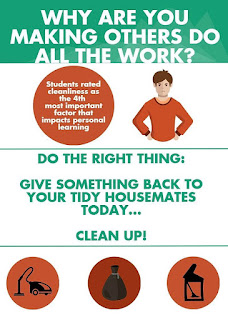
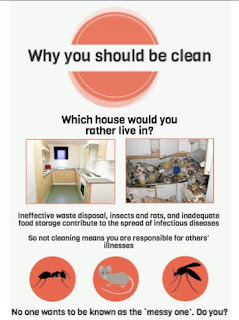
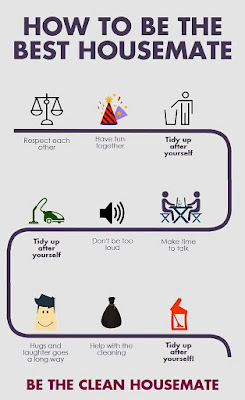
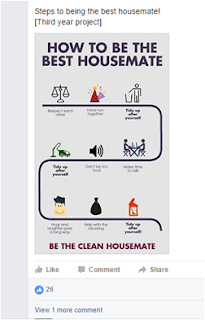 These posters were uploaded to social media, on the ‘Warwick Uni Freshers 2015-16’ page and a selection of first year accommodation pages on Facebook. We hoped that the persuasive methods used in the posters, such as responsibility, reciprocity, contrast effects, rhetorical questions, repetition and personal identity, would encourage students to engage in cleaner behaviours.This is believed to be an important area in which to achieve behaviour change, especially as research has shown that students rate cleanliness as the fourth most important factor impacting personal learning during higher education (Campbell & Bigger, 2008). Also, ineffective waste disposal and poor food storage leads to the invasion of insects and rats, and contributes to the spread of diseases (Krieger & Higgins, 2002). We predicted that highlighting these facts would increase the salience of the issue, ultimately motivating individuals to engage in cleaner behaviours.
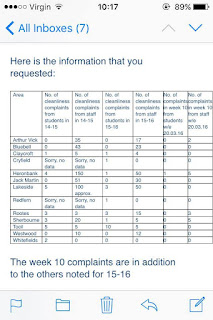 In order to gain a more in-depth insight into how big the problem was we contacted Warwick Accommodation requesting the total number of complaints in the last academic year (2014-2015), as well as the number of complaints from this academic year so far (2015 – March 2016). The complaints were from either staff (including cleaners) or students concerning the uncleanliness of the on-campus accommodations. Then, to determine whether our posters had made an effect, we compared this initial data with the number of complaints made during the week after our posters had been posted (week 10 of term 2, 14th -20th March 2016). To look for differences before and after the posters being made public, we worked out the average number of weekly complaints to compare with the complaints received during week 10 of term 2. Across all accommodation blocks there was not a reduction in the number of complaints received. However when focusing on the accommodation blocks that were exposed to the posters there was a reduction in the number of complaints (Figure 1.)
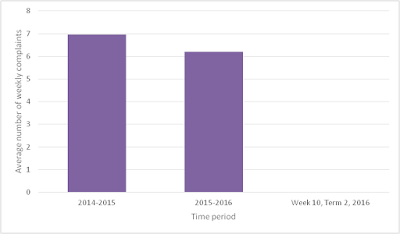 Figure-1: Number of weekly complaints on cleanliness for on-campus accommodation exposed to the persuasive postersOf course by comparing only 1 week with the 19 preceding weeks and 30 weeks from the previous year we cannot be certain that our posters alone lead to such a dramatic change. Students and staff simply may not be complaining about uncleanliness during week 10 as it is the final week of term, and so complaining at this late stage is unlikely to improve the situation as desired. Additionally complaints may have not been submitted before we obtained the data regarding number of complaints. It would be interesting to see what effect the posters would have once students are living more independently off-campus, as students no longer have the luxury of a cleaner, and so relationships and cooperation with housemates become somewhat more important. In this situation the posters may be more effective. References;Campbell, J. L., & Bigger, A. S. (2008). Cleanliness and learning in higher education, Facilities Manager, July-August, 28–36.Krieger, J., & Higgins, D. L. (2002). Housing and health: Time again for public action, American Journal of Public Health, 92, 758-768.Anna Hadjivassiliou, Natalie Croome and Rebecca Dooley
How do you deal with someone who has a superiority complex?
So how do you do this? Read on…
Promoting Positive Self-Esteem
The aim of this project was to promote positive self-esteem in female students at The University of Warwick.Research has shown that there is a correlation between self-esteem and make-up usage (Scott, 2007), specifically, the higher the make-up usage, the lower the self-esteem. We as females use make-up for different reasons and at different times. For some females, they may not feel as confident without make-up. For other females, they only use make-up when they go out. Therefore, we reasoned that increasing self-esteem will result in an increase in feelings of positivity about their facial features and result in a decrease in make-up use.We asked females to indicate how they felt statements relating to self-esteem relate to them. Following this, we asked them to list 6 facial features they like and 12 facial features they dislike. This was our availability heuristic (Schwarz, Bless, Strack, Klumpp, Rittenauer,-Schatka & Simons, 1991). The point of this was increase the salience of facial features they liked and decrease the salience of features they dislike. This should hopefully result in an increase in feelings of positive self-esteem. After this, we asked if these females were willing to go seven days without wearing make-up. Some said yes. Some said no.For those who said yes, we took a pre-test measure of how many days a week they use make-up and a post-test measure of how many days a week they use make-up. The results revealed there was a slight decrease in the amount of make-up used following the implementation of the availability heuristic (Figure 1). Since self-esteem and make-up use have been found to be correlated, this finding was interpreted as evidence that self-esteem had increased. Therefore, we had increased their self-esteem by promoting positive feelings about their facial features.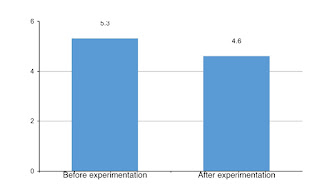 Figure 1 shows the number of days participants applied make-up in the week before and after the availability heuristic was applied.The media we chose for our project was Instagram. We created a page called ‘Project Makedown’. We asked females to write down one feature which they like about themselves without make-up and asked if we could take a picture to use for our Instagram page. Below are some examples. The hope is to increase our number of followers and make our desired change viral. You can visit our page here:https://www.instagram.com/projectmakedown/?hl=en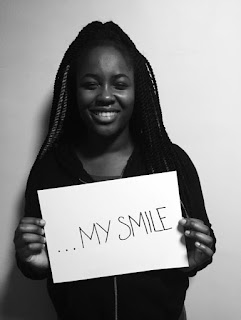
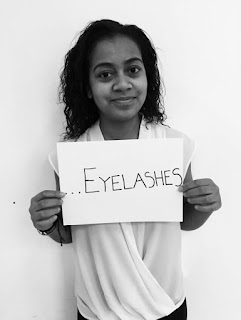
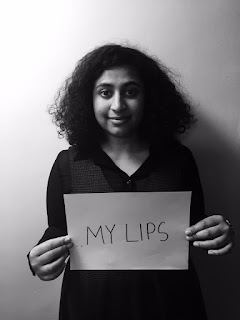 Fehinti Adesiyan & Gloria WilliamsReferencesSchwarz, N., Bless, H., Strack, F., Klumpp, G., Rittenauer-Schatka, H., & Simons, A. (1991). Ease of retrieval as information: Another look at the availability heuristic. Journal of Personality and Social psychology, 61(2), 195.Scott, S. (2007). Influence of cosmetics on the confidence of college women: an exploratory study. Unpublished doctoral dissertation). Hanover College, IN. Retrieved from http://psych. hanover. edu/research/thesis07/scottpaper. pdf.
- « Previous Page
- 1
- …
- 148
- 149
- 150
- 151
- 152
- …
- 562
- Next Page »