Background: The aim of this project was to encourage people to break away from stereotypical behaviour and also learning to do something new. The idea stemmed from ruminating about stereotypical behaviour and how that can become a self-fulfilling prophecy in that it socialises people to behave according to the stereotypes placed upon them. For example, a common stereotype for men is that they aren’t overly emotional and showing affection towards friends the same sex and the opposite being true for women – this applies more to heterosexual gender stereotypes as there are nuances with homosexual relationships. 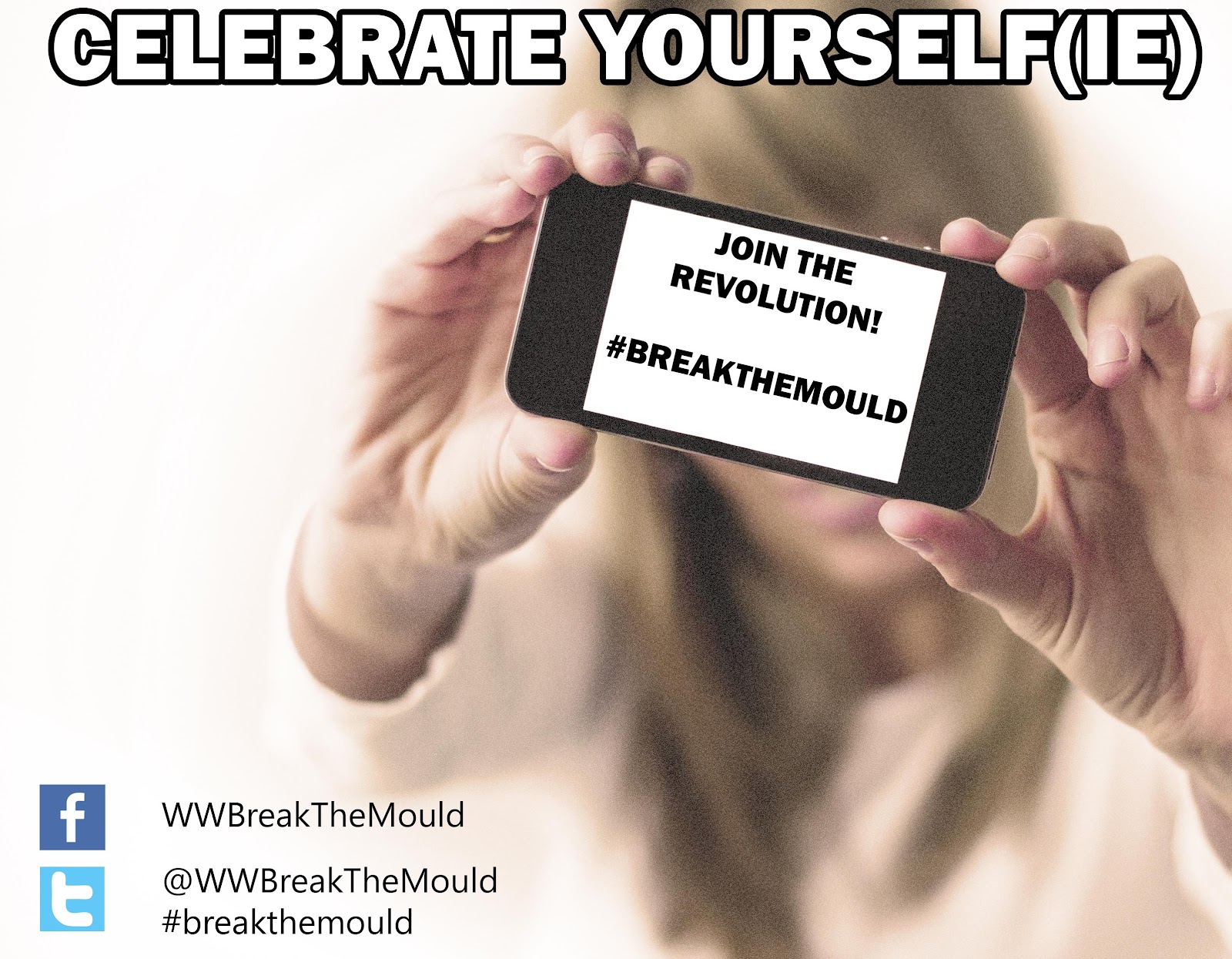
Surviving the Stress Age
Stress is an increasingly prevalent issue, particularly in students who are often newly independent young adults who, being introduced to certain challenges they must encounter for the first time. Stress has been linked with both negative physiological and psychological health outcomes (Goldenhar, 2005), as well as behavioural outcomes such as poorer performance in exams, which is especially relevant for students just prior to exam periods. With this in mind, a self-help technique was devised in order to help students cope with their stress. The self-help technique incorporates ideas from positive psychology – grateful thoughts are crucial to subjective well-being. Utilising these principles, people were asked to generate a grateful thought each day, with the idea being that this change in mind set will lead to a reduction in stress. 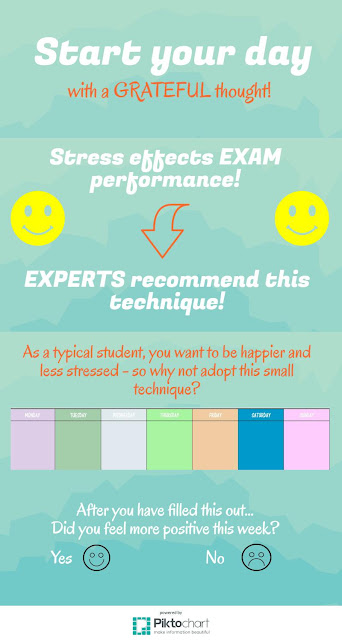 On the advert itself, two main persuasive techniques were implemented to increase the likelihood of students engaging with the positive behaviour change procedure.Firstly, the advert contains a manded altercast – a technique which makes a social role salient with the hope of this effecting their future behaviour. Students within the project were made aware of the importance of their role as a student in coping with the stress that comes with it. Also, the project utilised source credibility, promoting the fact that ‘experts’ from the field of psychology promote exercises like our self-help technique to reduce stress and enhance subjective well-being (Hovland and Weiss, 1951). Students who participated were encouraged to write a grateful thought down in each of the boxes, every day for a week. It was anticipated that following this week, participants would feel significantly less stressed and be on route to a developing a behaviour which would enable them to cope with any future stressful situations. ReferencesHovland, C. I., & Weiss, W. (1951). The influence of source credibility on communication effectiveness. Public Opinion Quarterly, 15, 635-650. Goldenhar, R. M. (2005). The effects of a stress reduction intervention on quality of life in psoriasis patients. Dissertation abstracts international: section b: the sciences and engineering, 66, 1169Daniel Bell, Disha Koshal & Vanessa Ajagu
The Upside of Quitting
You all have probably heard the saying “a quitter never wins and a winner never quits.” It’s a social trap: a situation in which not quitting produces a small, immediate positive outcome at first (i.e. pride), but eventually results in a larger negative outcome after a delay. It’s become so ingrained that we don’t even think about it anymore.We are looking to help with some small problems which can eat away at people’s time and resources. For example, reading the whole of the book just because they started it and are determined to finish it despite not enjoying it. Herein lie the two concepts: sunk cost (the money they spent on the book and the time they have spent reading it, which they cannot get back and must not use as a reason to continue) and opportunity cost (they could spend the time on a book they enjoy more). We created a website where people would look to solve these small dilemmas. Here’s the website’s map: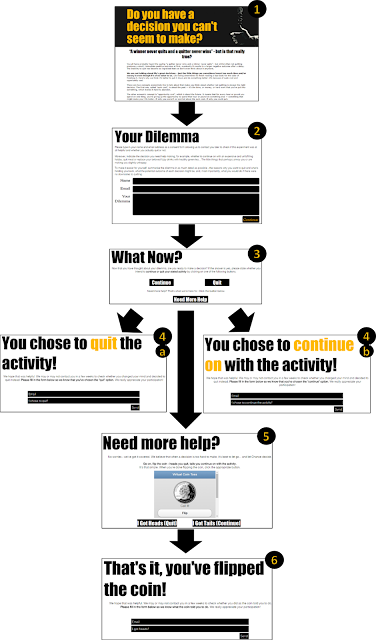
 We weren’t able to compare if the coin toss or the deciding for themselves led to a higher chance of following through with quitting the behaviour, but we hope that we have created a positive change in people’s lives through freeing them from wasting their time on rewardless and costly endeavours.Ande Milinyte & Jacob Barker
- « Previous Page
- 1
- …
- 144
- 145
- 146
- 147
- 148
- …
- 562
- Next Page »